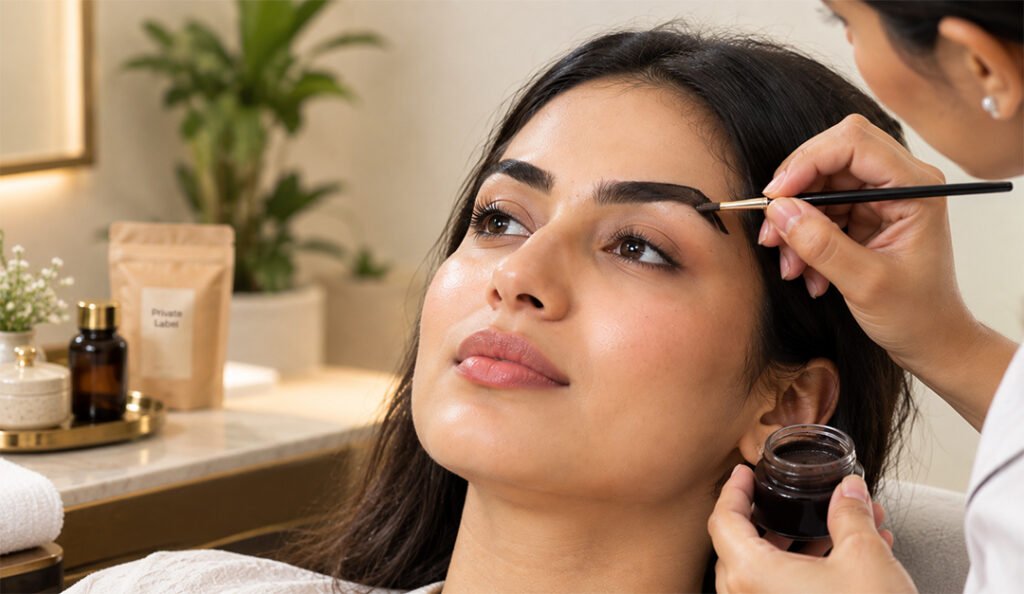
Getting henna eyebrows done is the easy part. What determines whether that colour holds for two weeks or fades in five days almost always comes down to what happens in the first 48 hours after application—and most people never hear this clearly, either from the salon or from whatever eyebrow tint they bought to use at home. If you’ve ever had henna brows fade unevenly or disappear faster than promised, the tint itself usually isn’t the problem. The aftercare is.
This guide walks through how to care for henna eyebrows after application, why the first two days matter more than anything else, and what separates a tint that fades gracefully from one that just washes out.
Why Aftercare Matters More With Henna Than With Other Brow Tints
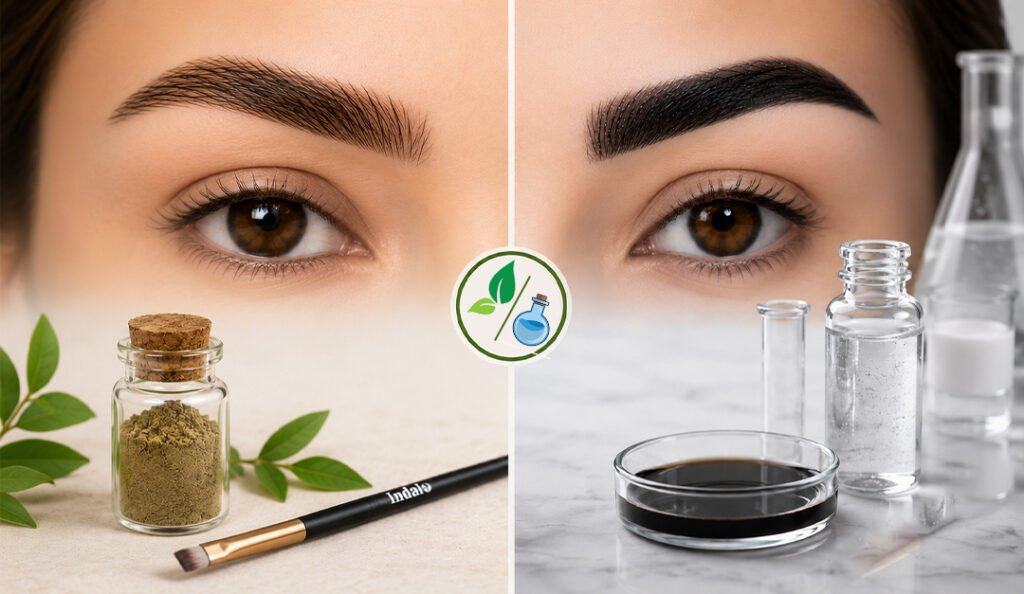
Henna works differently from synthetic brow tints. A chemical dye sits on the surface of the skin and hair and gets absorbed almost immediately, which is why it can be rinsed within minutes of application. Henna, on the other hand, needs time to oxidise and bond with the outer layer of skin cells and the hair shaft itself. That bonding process isn’t instant — it continues developing for up to 24 to 48 hours after the henna paste has already been removed.
This is the part most people don’t realise: the colour you see right after removing the henna is not the final colour. It darkens and settles over the next two days as oxidation completes. If you wash your brows too soon, exfoliate them, or expose them to steam and sweat during that window, you’re interrupting a chemical process that hasn’t finished yet — and that’s exactly why some people report their henna eyebrow tint “not lasting,” when in reality it never got the chance to fully develop.
The First 24 Hours: What to Avoid
This is the window that decides most of your result.
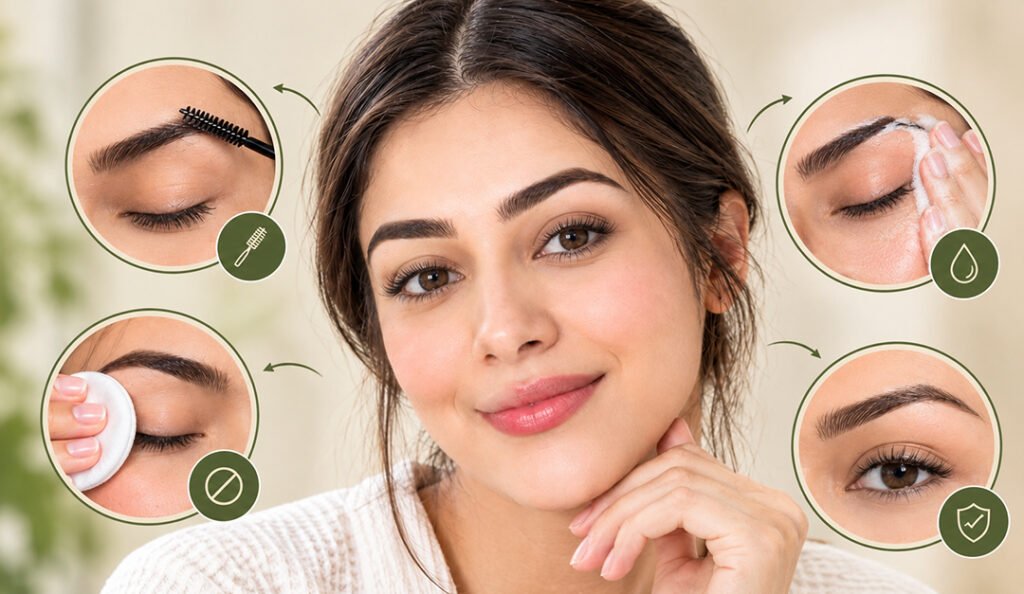
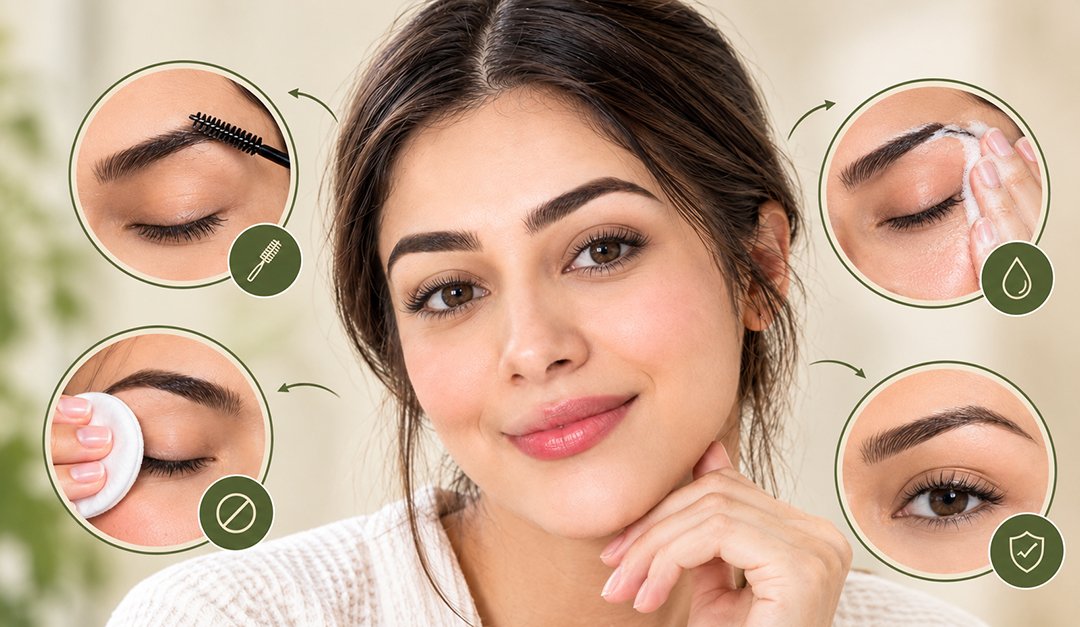
Keep the area completely dry. No washing your face directly over the brows, no steam from a hot shower directed at your face, no swimming. Water — especially hot water — accelerates the loss of unset pigment before it’s had time to bond.
Skip sweat-heavy activity. Gym sessions, saunas, or anything that causes heavy facial sweating should wait. Sweat carries salt and moisture that can lift pigment prematurely, the same way sweat fades a fresh tattoo before it’s healed.
Don’t apply skincare products near the brows. Cleansers, exfoliants, retinol, and even some moisturisers contain ingredients that can break down oxidising henna. If you’re doing a full skincare routine, work around the brow area entirely for the first day.
Avoid touching or scratching. As henna sets, it’s normal for the area to feel slightly tight or dry. Picking at flaking skin pulls pigment out unevenly, which is one of the most common causes of patchy-looking henna brows a few days later.
Days Two to Ten: Extending the Life of the Tint
Once the initial oxidation window has passed, the focus shifts from protecting the setting process to slowing down natural fade.
Moisturise, but don’t overdo the skin layer. A light, fragrance-free moisturiser applied around (not directly on top of, in the first couple of days) the brow area helps prevent the surrounding skin from over-exfoliating, which is one of the main ways stain colour is lost. Once past day two, gentle moisturising over the brows themselves is fine and actually helps prevent flaking.
Avoid oil-based cleansers and makeup removers directly on the brows. Oils are effective at breaking down pigment — that’s true for eye makeup remover too, and it’s exactly why it removes henna stain faster than a gentle, oil-free cleanser would.
Limit direct sun exposure where possible. UV exposure accelerates fading in any topical stain, henna included. This doesn’t mean avoiding the outdoors, just being mindful if you’re spending extended time in direct sun shortly after application.
Don’t exfoliate the brow area. Physical scrubs, chemical exfoliants, and even consistent rubbing from glasses frames or sunglasses can wear down stained skin faster than expected.
What a Fading Timeline Actually Looks Like
For most people, henna eyebrow tint on the skin lasts anywhere from five to fourteen days, while the stain on the hair itself can last four to six weeks, since hair holds pigment differently than skin does. Skin naturally exfoliates faster than hair grows out, which is why the “shadow” look on skin fades before the hair colour does — this is completely normal and not a sign the tint failed.
Skin type plays a role too. Oilier skin tends to lose the stain faster because oil breaks down pigment more actively than dry skin does. This isn’t something aftercare can fully control, but it’s useful to know going in so expectations match reality rather than assuming a shorter fade means a poor-quality tint.
Why the Quality of the Tint Itself Still Matters
Good aftercare can only do so much if the eyebrow tint being used wasn’t formulated or processed well to begin with. A poorly processed henna powder — one with inconsistent lawsone content, excess moisture, or contamination from a rushed drying process — will fade unevenly no matter how carefully someone follows aftercare steps. This is where sourcing actually connects back to end results: brands and salons buying from an inconsistent eyebrow tint manufacturer often can’t figure out why customer results vary so much, when the real answer is batch-to-batch inconsistency at the source.
This is also why origin matters. Henna grown and processed in Rajasthan, particularly the Sojat region, tends to carry a naturally higher lawsone content — the compound responsible for stain depth and how well the colour actually bonds and holds. A tint made from properly sourced, well-processed henna gives aftercare something worth protecting in the first place.
Sourcing From Kirpal Export Overseas
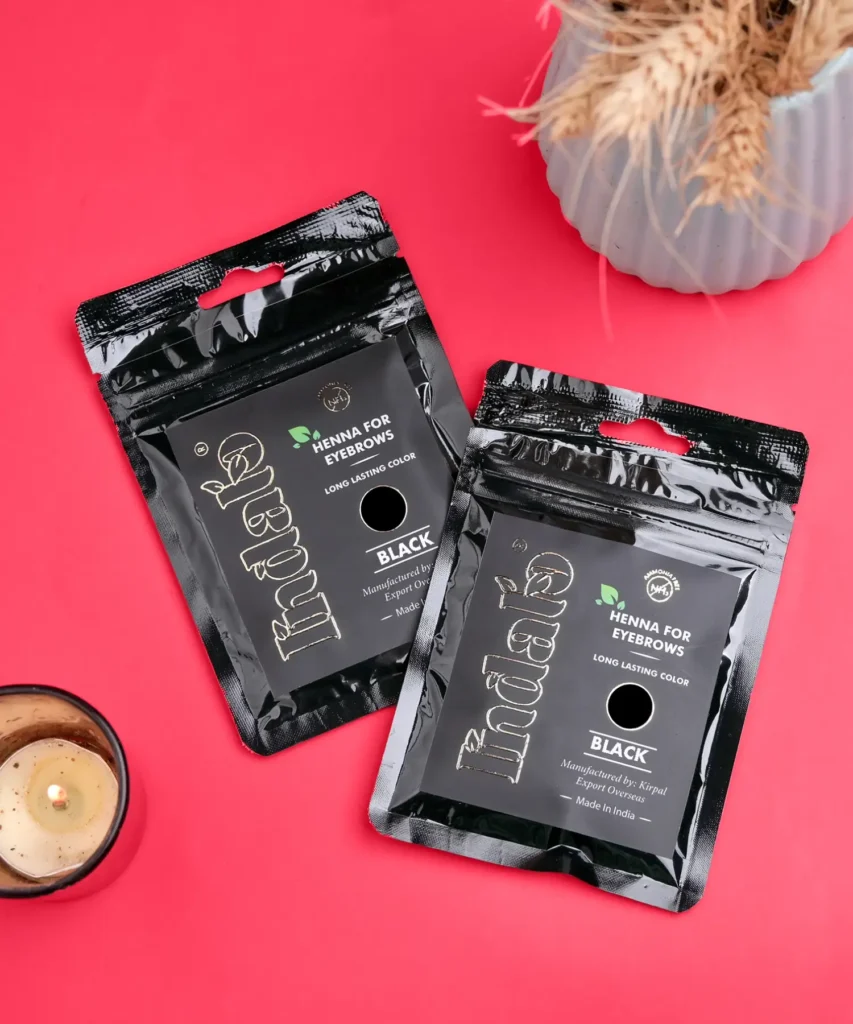
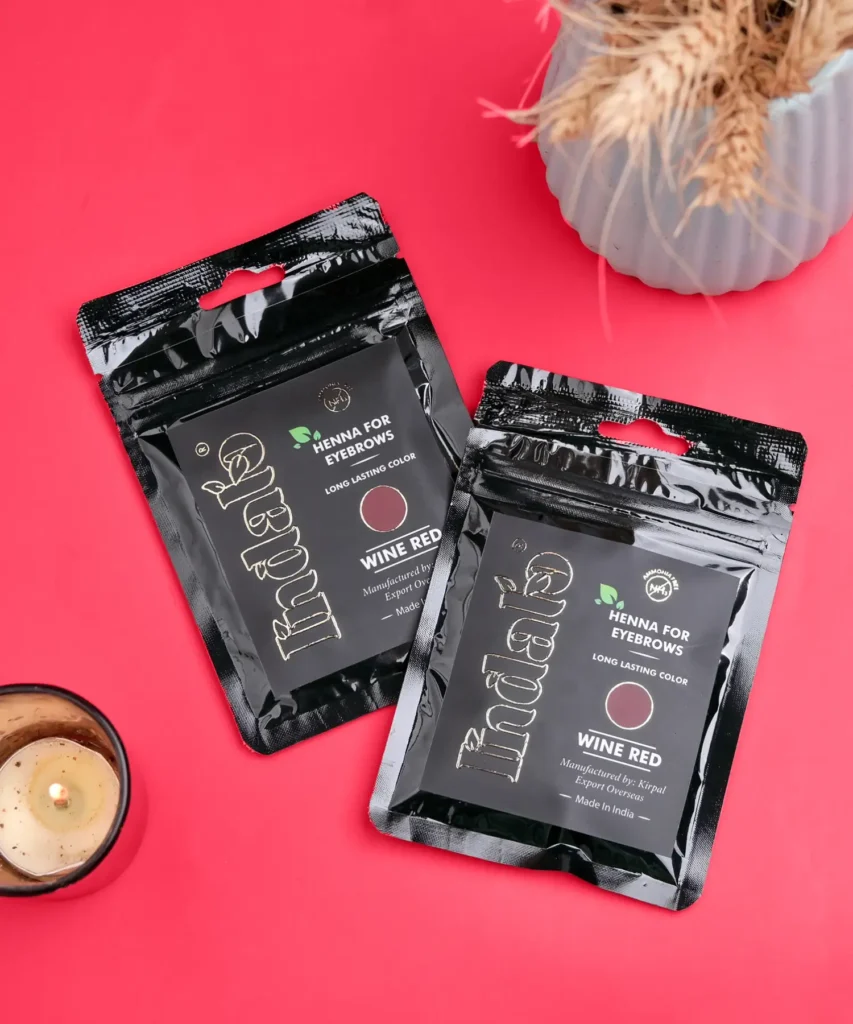
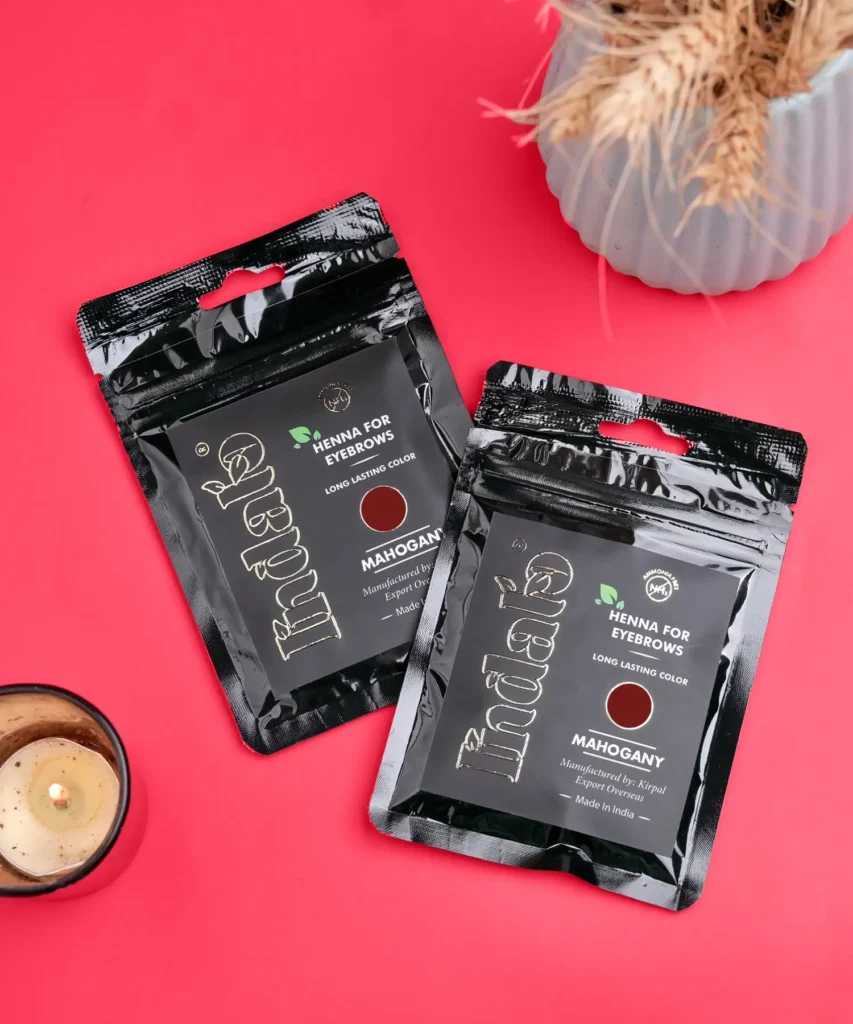
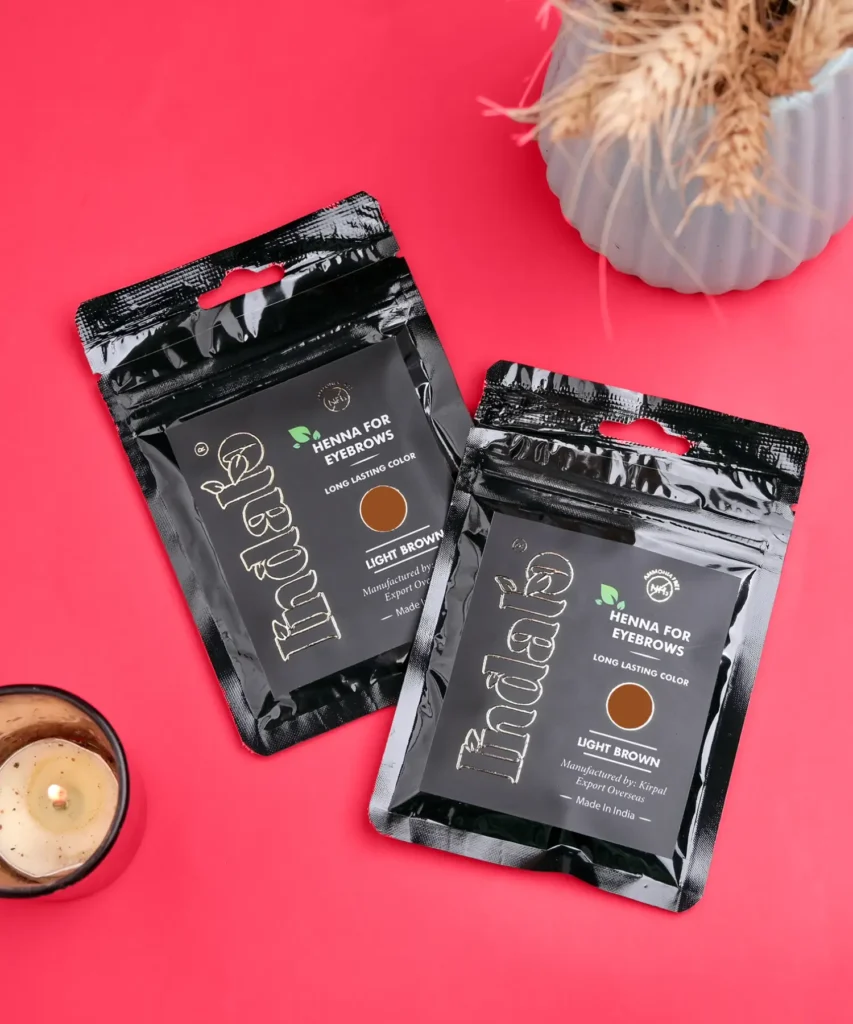
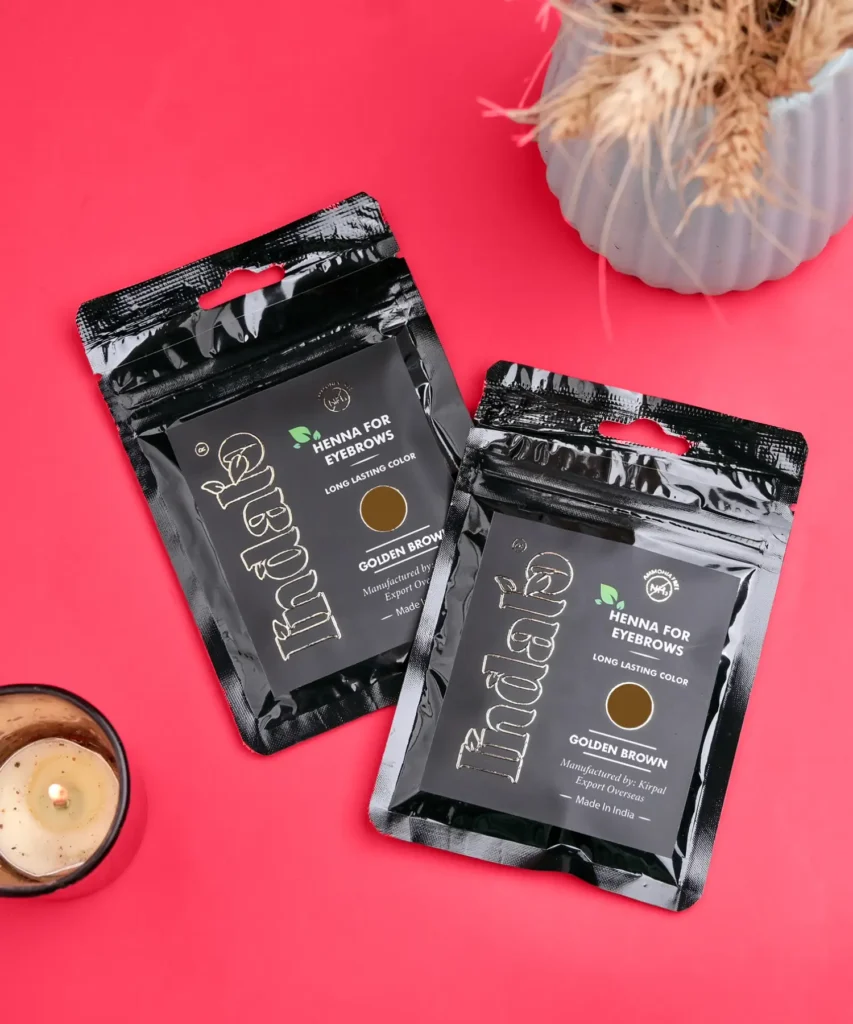
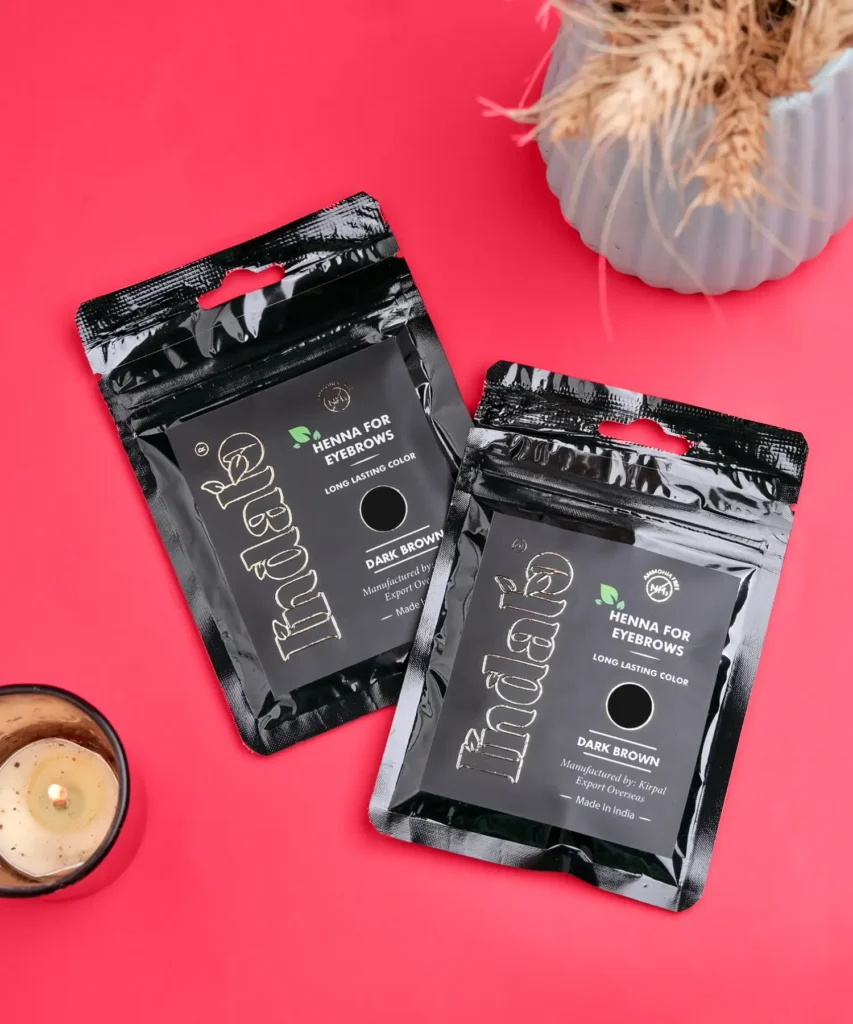
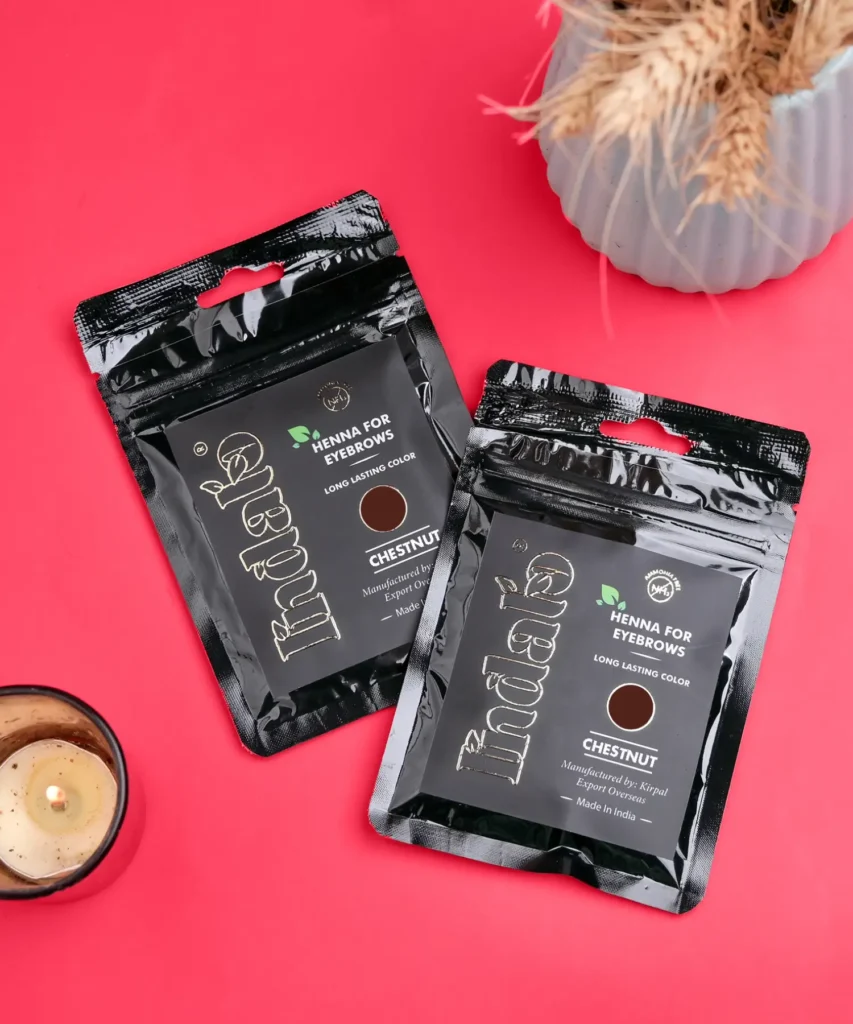
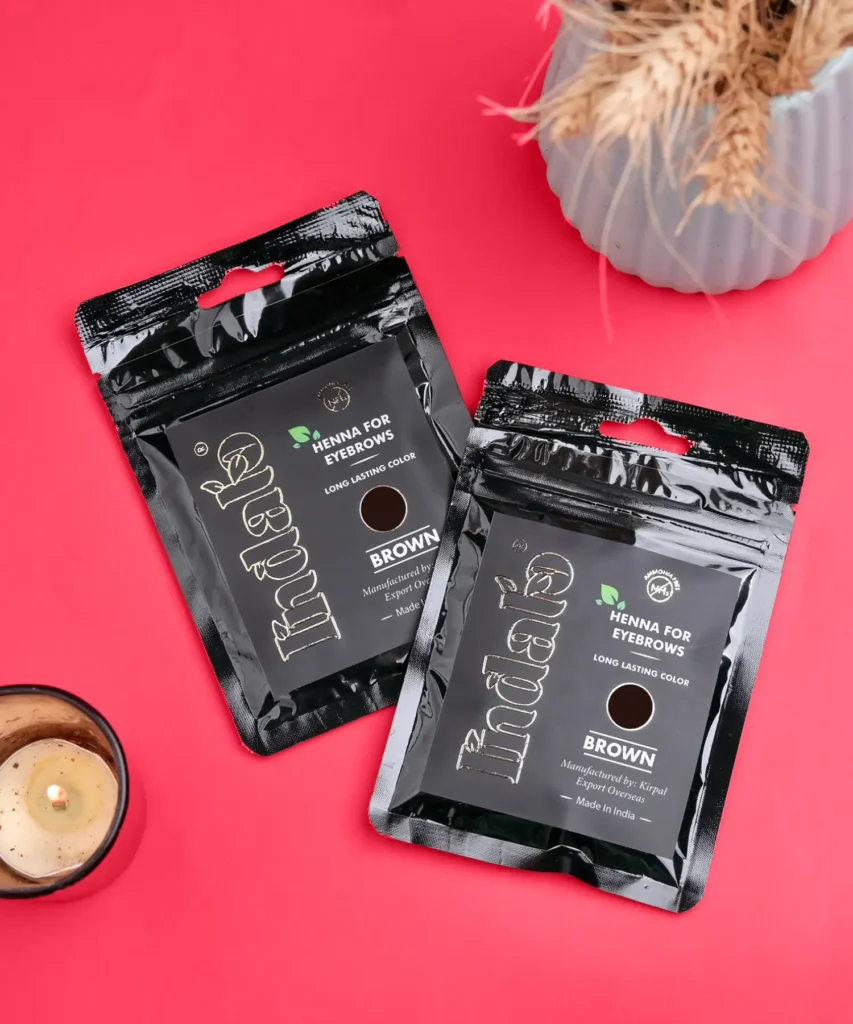
Kirpal Export Overseas (KEO) is an eyebrow henna manufacturer and exporter based in Sojat, Rajasthan, supplying eyebrow tint to salons, private label brow brands, and wholesale distributors internationally across the UK, USA, UAE, Germany, and Australia. Because KEO processes henna directly from GI-tagged Sojat origin under BIS/IS 11142 quality standards, the batch-to-batch consistency that determines how well a tint holds through the aftercare window described above is built into the sourcing itself, not left to chance.
For brow brands or salon chains evaluating an eyebrow tint manufacturer, this consistency is often the difference between customers who follow aftercare and get the expected 5–14 day skin stain with 4–6 week hair colour retention, and customers who follow the same steps but still see uneven, short-lived results because the tint itself was inconsistently processed. KEO also supports private label and OEM orders, making it a fit for brow brands building their own eyebrow tint line rather than reselling a generic, unbranded product.
The Bottom Line
Caring for henna eyebrows isn’t complicated, but it is time-sensitive. The first 24 hours determine most of the outcome, the following ten days determine how long that outcome lasts, and the tint’s own quality determines how much of a difference good aftercare can actually make. Keep the area dry and product-free early on, avoid oils and exfoliation as it settles, and source from a manufacturer whose processing is consistent enough that the aftercare steps actually have something reliable to protect.