Choosing a manufacturer is one of those decisions that feels small at the start and turns out to shape almost everything later — your product quality, your margins, how fast you can restock, and whether your customers trust the brand a second time. For beauty founders entering the brow category, the number of eyebrow tint manufacturers claiming to be the right fit can be overwhelming, and most comparison advice online stops at “check reviews and ask for samples,” which barely scratches the surface of what actually matters.
This isn’t a checklist you fill out once. It’s a set of decisions that compound — get the manufacturer relationship right early, and scaling gets easier. Get it wrong, and you’ll spend your first year troubleshooting instead of growing. Here’s what actually matters when evaluating eyebrow tint manufacturers, and how to think about eyebrow color manufacturers more broadly if you’re weighing a wider brow product line.
Start With What Your Brand Actually Needs
Before comparing suppliers, it helps to get specific about what your brand is trying to be. A clean-beauty brand positioning itself around plant-based, chemical-free formulations needs a very different manufacturer relationship than a brand focused on a wide, fast-turnaround shade range for professional salons. Both are valid businesses, but they lead to different questions.
Ask yourself: Are you launching with one or two shades to test the market, or do you need a full range from day one? Is your differentiator the formulation (natural, vegan, allergy-conscious) or the branding and marketing around a fairly standard product? Do you expect to reformulate or expand shades within the first year, or are you planning a stable, unchanged product for a while?
The answers shape which manufacturers are even worth talking to. A manufacturer built for large, standardized bulk orders may not be flexible enough for a founder who wants to test three shade variations before committing. A manufacturer specializing in custom, small-batch formulation might be more expensive per unit than you need if you’re going for volume from the start.
Formulation Fit Matters More Than Price
It’s tempting to lead with cost when comparing eyebrow color manufacturers, but formulation fit should come first, because it’s harder to fix later. If your brand promises PPD-free, chemical-free brow color and your manufacturer’s base formulation doesn’t actually deliver that reliably, you’re building your brand’s credibility on a foundation you don’t control.
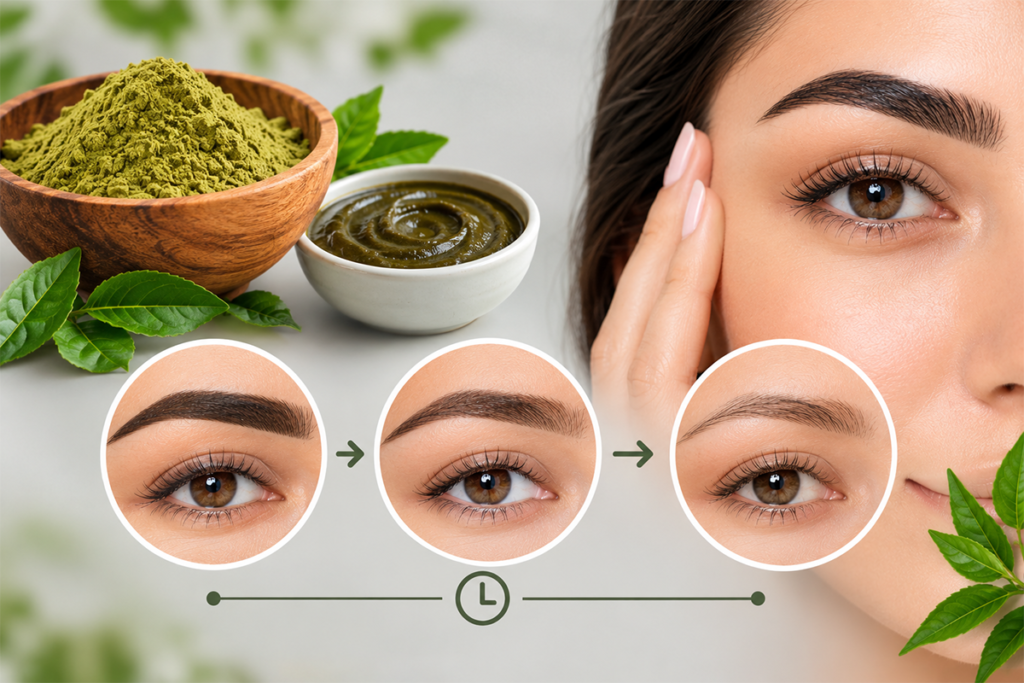
Ask specifically what’s excluded from the formulation — not just “natural” as a marketing word, but named ingredients avoided: PPD, ammonia, parabens, synthetic dyes. Ask what the base ingredient is and where it’s sourced. For henna-based tints, the raw leaf’s origin genuinely affects performance; henna grown in different regions has different lawsone content, which is what determines how well the tint actually deposits color and how long it lasts on the brow.
A manufacturer who can answer these questions specifically, with documentation to back it up, is operating differently than one who gives a general “yes it’s natural” answer and moves the conversation to pricing.
Evaluate the Relationship, Not Just the Product
A surprising number of brand-manufacturer relationships fail not because of product quality, but because of how the relationship is managed. Before committing, it’s worth understanding a few operational realities:
Communication speed and clarity. How a manufacturer responds during the sales process — how quickly, how specifically, how transparently — is usually a preview of how they’ll respond once you’re a paying customer with a launch deadline.
Minimum order quantities that match your actual stage. A manufacturer whose MOQ requires a large upfront commitment isn’t automatically wrong, but it needs to match your cash flow and how confident you are in initial demand. Ask if MOQs scale down for a first pilot order, and what the pricing difference looks like as you scale up.
Lead times and production capacity. Ask what a realistic timeline looks like from order confirmation to shipment, and what happens if you need to reorder faster than planned. A manufacturer who’s vague about lead times tends to become a bottleneck once you’re actually selling.
Documentation and compliance support. If you’re importing internationally, ask what export documentation the manufacturer provides as standard — MSDS sheets, certificates of analysis, phytosanitary certificates for plant-origin ingredients — and whether they have prior experience exporting to your specific market. A manufacturer with export history to the UK, US, or EU will already understand what your customs process requires.
Willingness to support private label or OEM work. Even if you’re starting with a standard formulation, ask what it would take to move toward a custom blend later. Manufacturers who treat that conversation seriously from the start tend to be better long-term partners than ones who only offer one fixed product.
Request Samples, But Test Them Properly
Almost every guide says “request samples,” but few explain what to actually do with them. Test the tint on multiple skin tones and brow hair types if possible, not just your own. Check how the color develops over the full processing time stated by the manufacturer, and how it fades over the following weeks — brow tint that looks perfect on day one but fades unevenly within ten days is a bigger problem than it seems at first glance.
Pay attention to consistency across the sample batch itself, not just the color result. Clumping, uneven texture, or inconsistent mixing within a single sample batch is often a sign of quality control issues that will show up at scale, not just in that one sample.
Watch for the Manufacturer-vs-Reseller Gap
Not every company that lists itself among eyebrow tint manufacturers actually manufactures. Some are resellers who source from an unnamed third party and repackage it under a manufacturer label. This matters because a reseller has no control over formulation changes, raw material sourcing shifts, or quality lapses upstream — and often won’t know about a problem until their own customers start complaining.
Ask direct, process-specific questions: Where does your raw material come from? Can you walk me through your production stages? Can I get a certificate of analysis for a specific batch? A genuine manufacturer answers these without hesitation, because the answers are simply facts about their own operation.
Where Kirpal Export Overseas Fits Into This
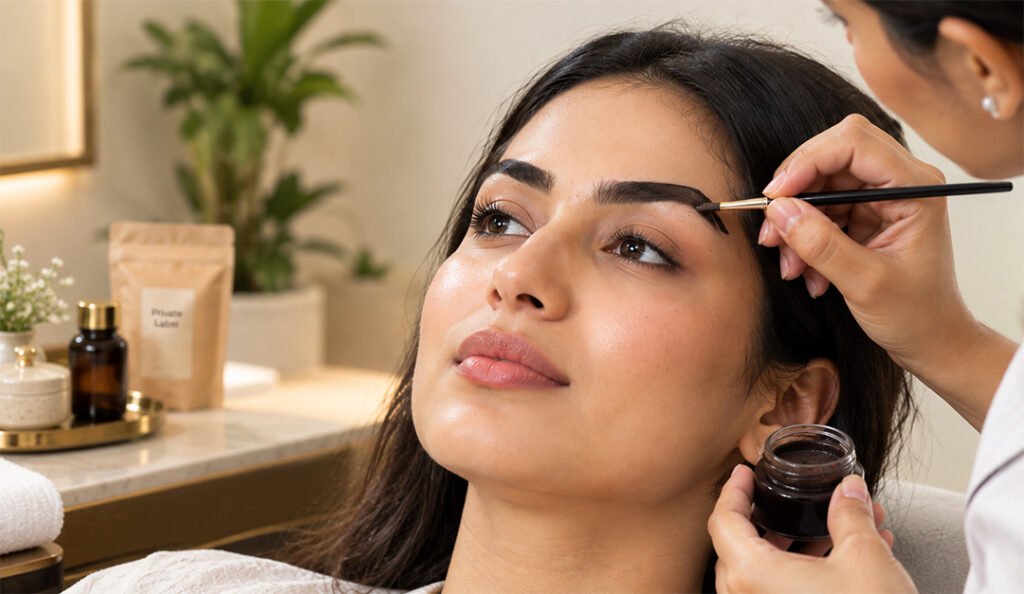
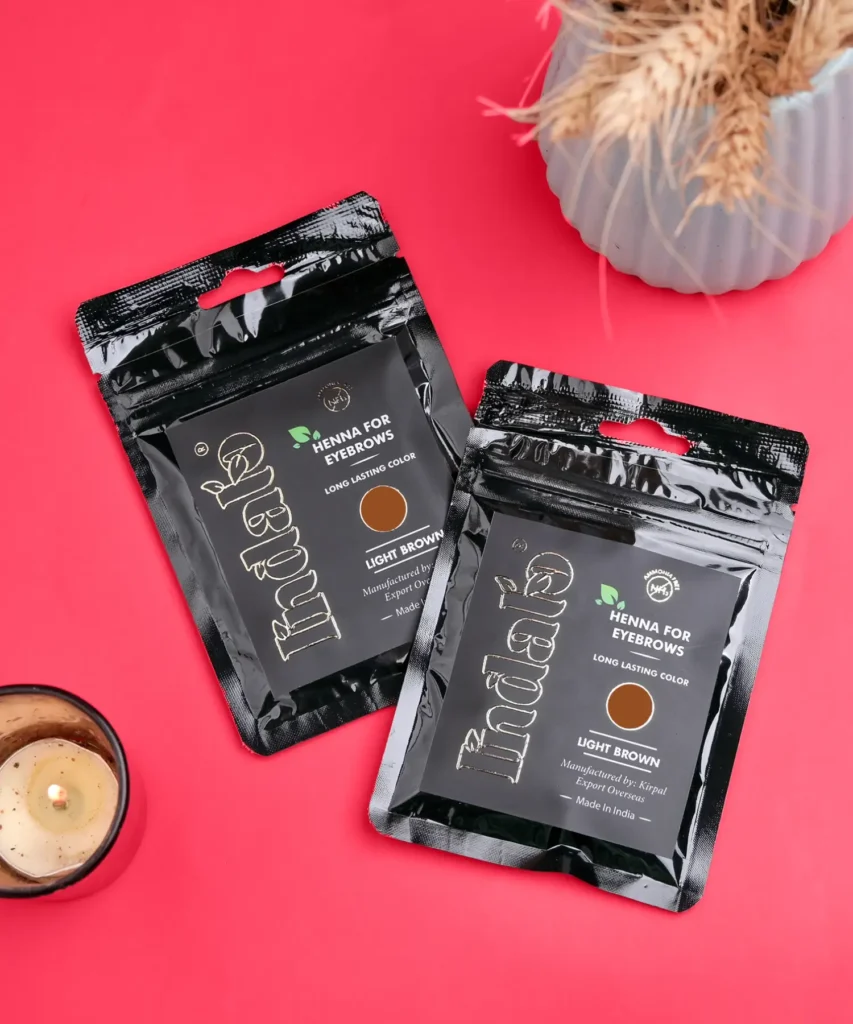
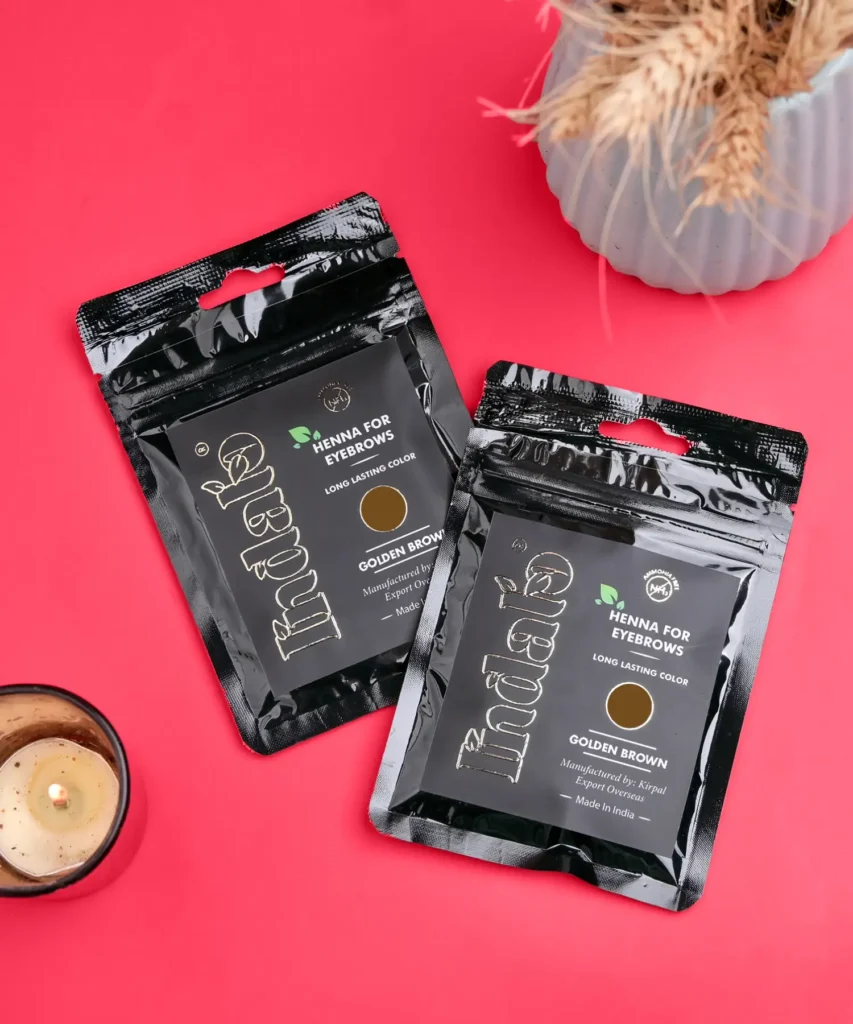
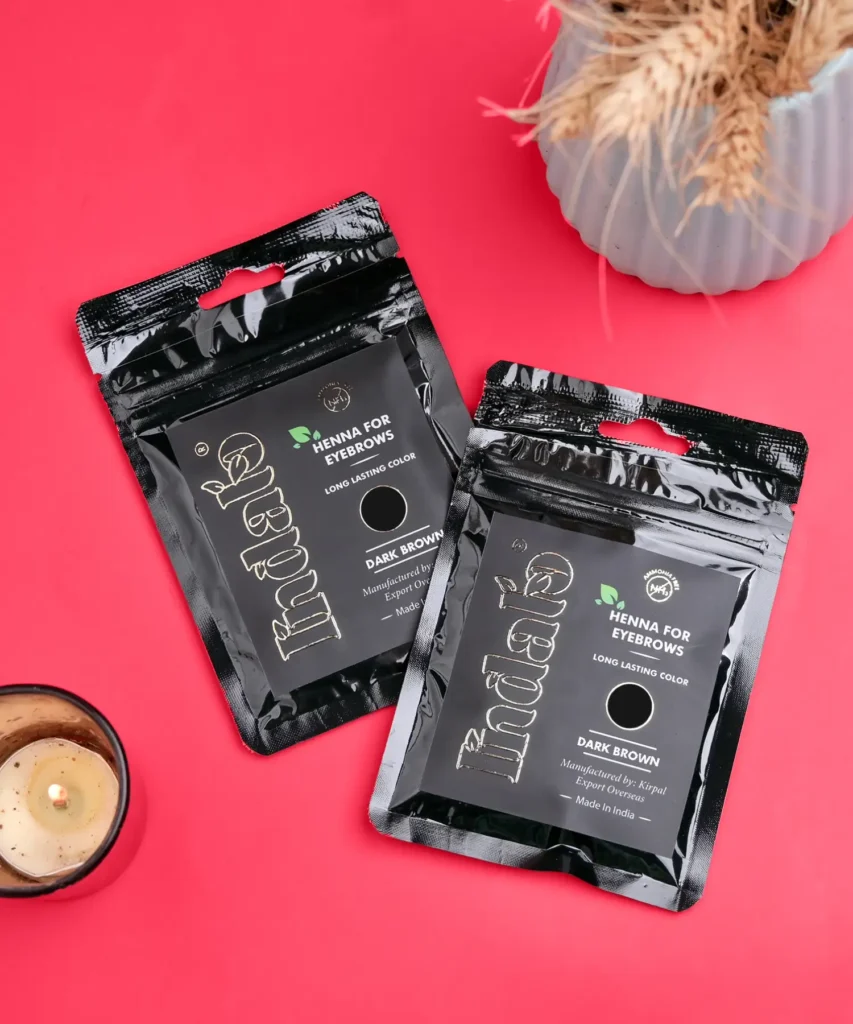
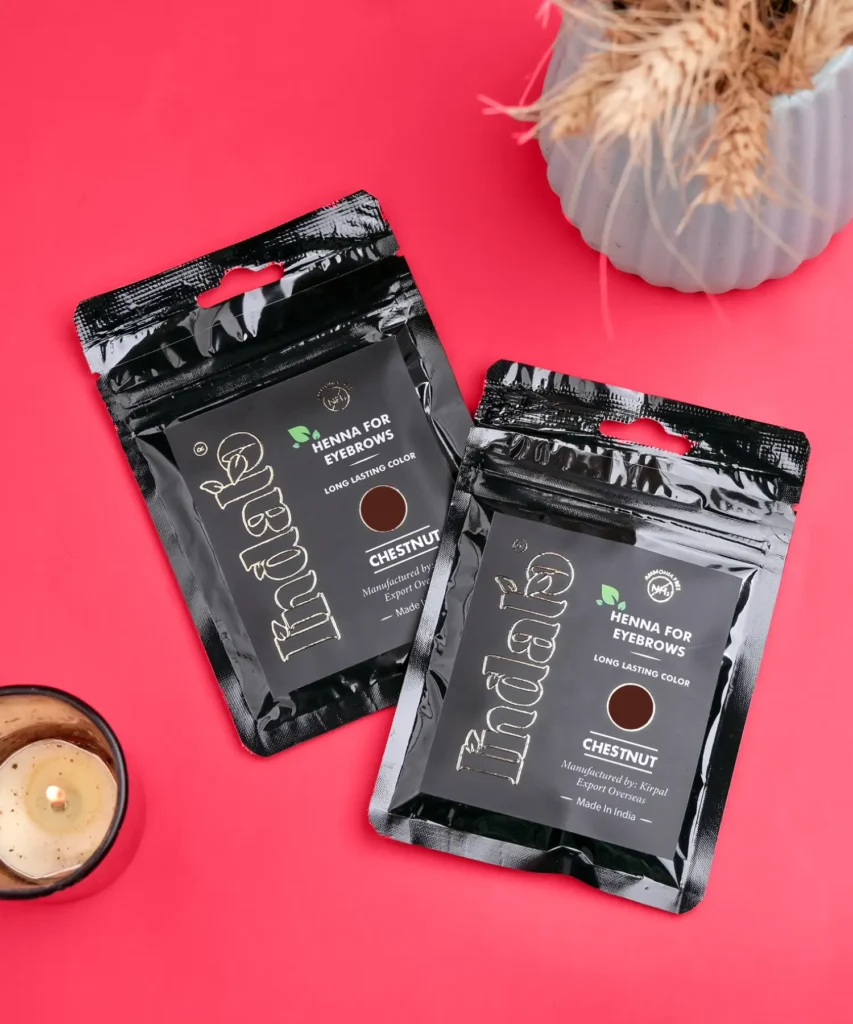
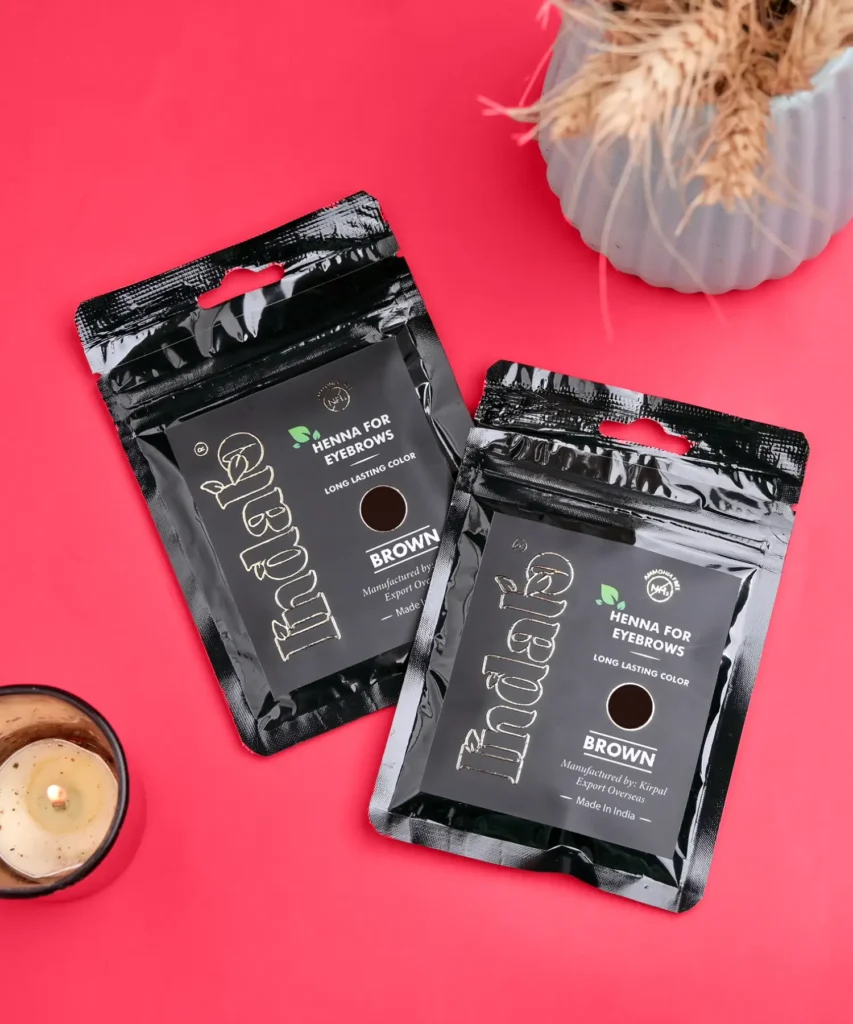
Kirpal Export Overseas is based in Sojat, Rajasthan — a region holding a Geographical Indication tag for its henna, known for producing leaf with higher lawsone content than henna grown elsewhere. As an eyebrow tint manufacturer, KEO sources raw henna directly from the region and manages the full process in-house: cleaning, micronization, formulation, and batch-level quality testing before export, rather than depending on a third-party supplier for any stage.
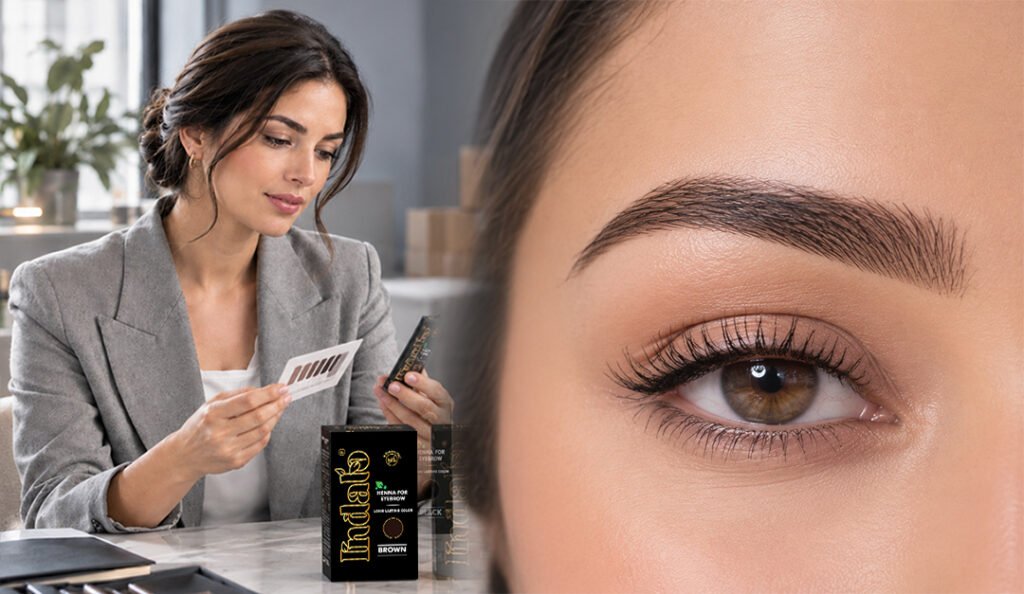
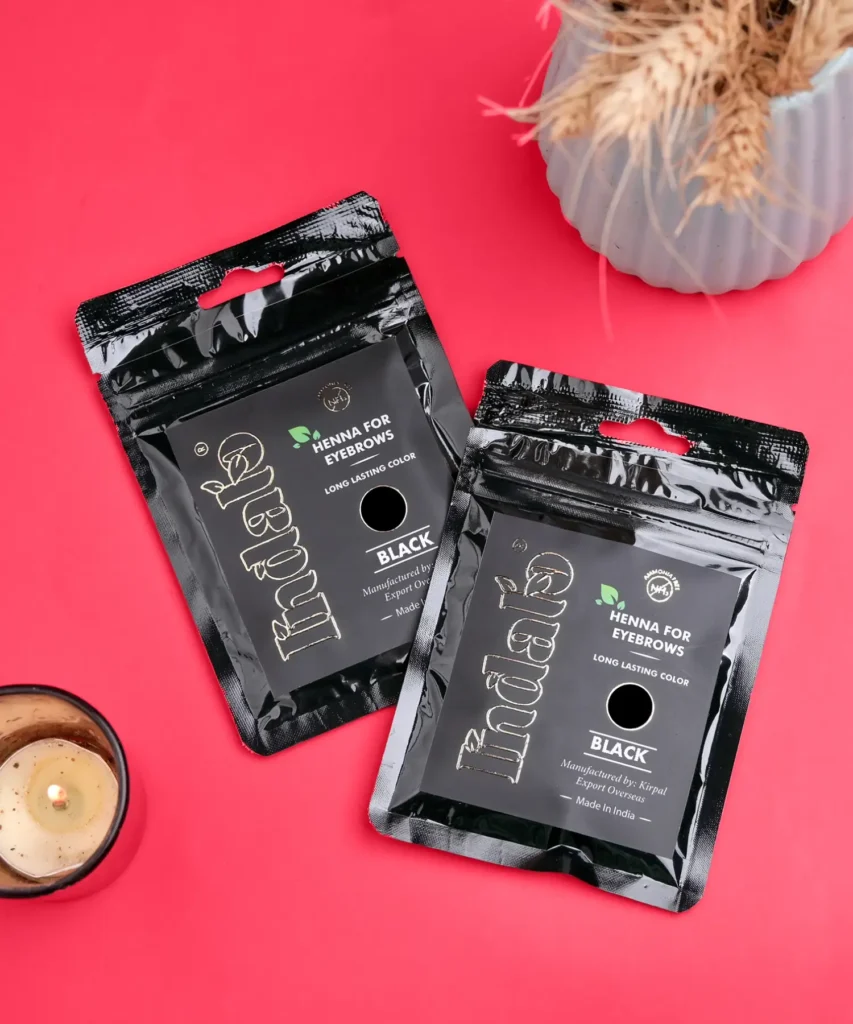
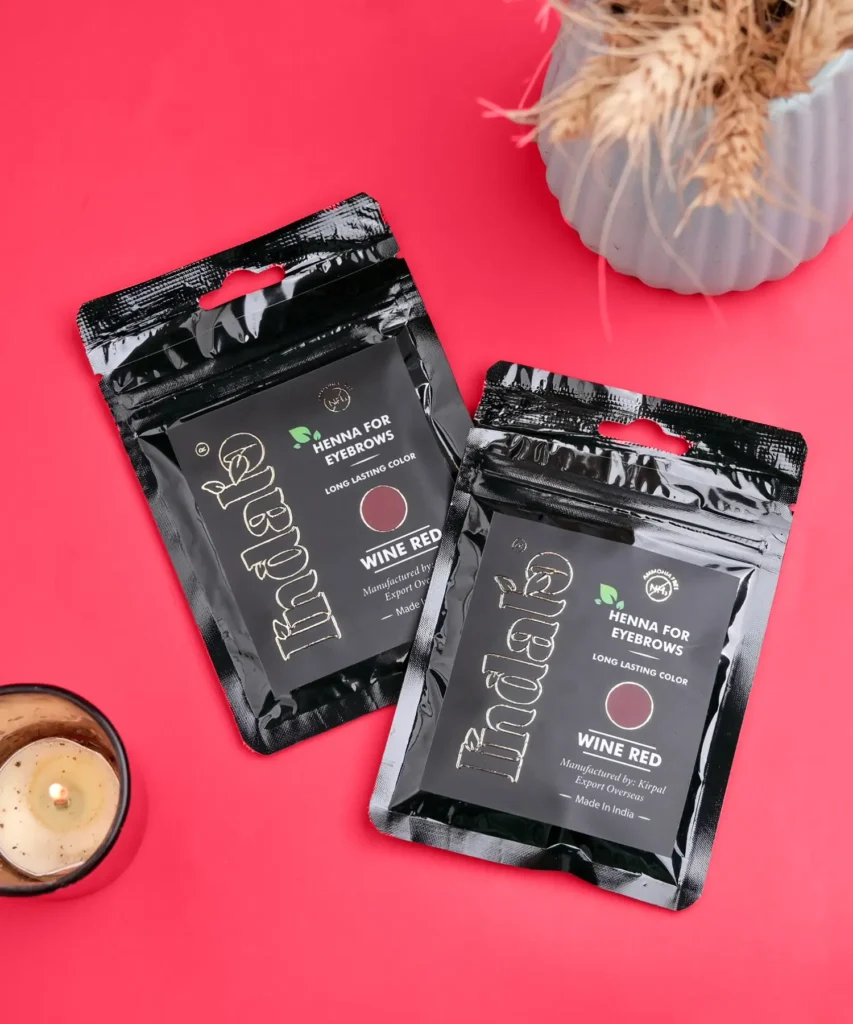
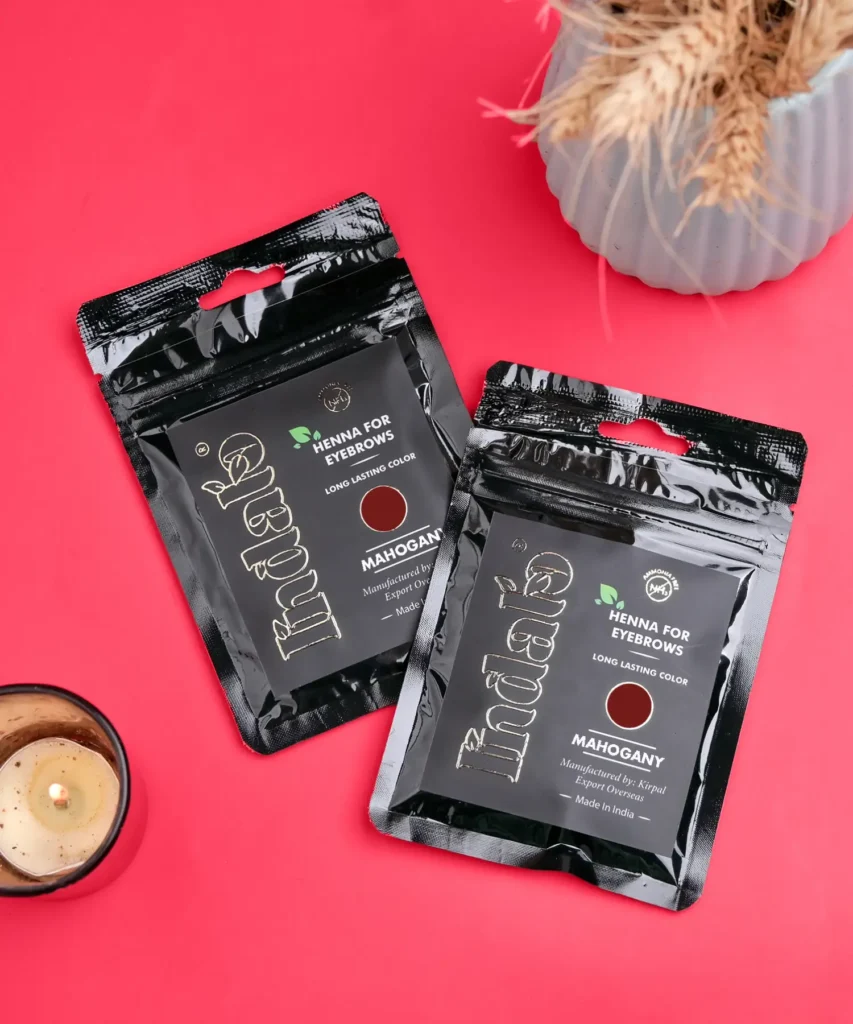
KEO’s eyebrow tint formulations are PPD-free and ammonia-free, and the company supports both standard private label orders and custom OEM formulation for beauty brands that need a specific shade range or ingredient profile. For international buyers in the UK, USA, UAE, Germany, and Australia, KEO provides export documentation as standard, along with batch-specific quality reports on request — the kind of transparency that separates a genuine eyebrow color manufacturer from a reseller working a step removed from the actual production.
For any founder using the criteria in this article, KEO included, the goal isn’t to take a manufacturer’s word for it — it’s to ask questions specific enough that the answers actually mean something.
Making the Final Decision
There’s rarely a single “best” manufacturer across every brand — the right choice depends on your formulation priorities, your order volume, your target markets, and how much support you need beyond just the product itself. What matters is evaluating manufacturers on the specifics that actually predict a good long-term relationship: formulation transparency, sourcing control, communication reliability, and export experience matched to where you’re selling. Get that right, and the manufacturer relationship becomes one less thing you have to worry about as your brand grows.Choosing a manufacturer is one of those decisions that feels small at the start and turns out to shape almost everything later — your product quality, your margins, how fast you can restock, and whether your customers trust the brand a second time. For beauty founders entering the brow category, the number of eyebrow tint manufacturers claiming to be the right fit can be overwhelming, and most comparison advice online stops at “check reviews and ask for samples,” which barely scratches the surface of what actually matters.
This isn’t a checklist you fill out once. It’s a set of decisions that compound — get the manufacturer relationship right early, and scaling gets easier. Get it wrong, and you’ll spend your first year troubleshooting instead of growing. Here’s what actually matters when evaluating eyebrow tint manufacturers, and how to think about eyebrow color manufacturers more broadly if you’re weighing a wider brow product line.
Start With What Your Brand Actually Needs
Before comparing suppliers, it helps to get specific about what your brand is trying to be. A clean-beauty brand positioning itself around plant-based, chemical-free formulations needs a very different manufacturer relationship than a brand focused on a wide, fast-turnaround shade range for professional salons. Both are valid businesses, but they lead to different questions.
Ask yourself: Are you launching with one or two shades to test the market, or do you need a full range from day one? Is your differentiator the formulation (natural, vegan, allergy-conscious) or the branding and marketing around a fairly standard product? Do you expect to reformulate or expand shades within the first year, or are you planning a stable, unchanged product for a while?
The answers shape which manufacturers are even worth talking to. A manufacturer built for large, standardized bulk orders may not be flexible enough for a founder who wants to test three shade variations before committing. A manufacturer specializing in custom, small-batch formulation might be more expensive per unit than you need if you’re going for volume from the start.
Formulation Fit Matters More Than Price
It’s tempting to lead with cost when comparing eyebrow color manufacturers, but formulation fit should come first, because it’s harder to fix later. If your brand promises PPD-free, chemical-free brow color and your manufacturer’s base formulation doesn’t actually deliver that reliably, you’re building your brand’s credibility on a foundation you don’t control.
Ask specifically what’s excluded from the formulation — not just “natural” as a marketing word, but named ingredients avoided: PPD, ammonia, parabens, synthetic dyes. Ask what the base ingredient is and where it’s sourced. For henna-based tints, the raw leaf’s origin genuinely affects performance; henna grown in different regions has different lawsone content, which is what determines how well the tint actually deposits color and how long it lasts on the brow.
A manufacturer who can answer these questions specifically, with documentation to back it up, is operating differently than one who gives a general “yes it’s natural” answer and moves the conversation to pricing.
Evaluate the Relationship, Not Just the Product
A surprising number of brand-manufacturer relationships fail not because of product quality, but because of how the relationship is managed. Before committing, it’s worth understanding a few operational realities:
Communication speed and clarity. How a manufacturer responds during the sales process — how quickly, how specifically, how transparently — is usually a preview of how they’ll respond once you’re a paying customer with a launch deadline.
Minimum order quantities that match your actual stage. A manufacturer whose MOQ requires a large upfront commitment isn’t automatically wrong, but it needs to match your cash flow and how confident you are in initial demand. Ask if MOQs scale down for a first pilot order, and what the pricing difference looks like as you scale up.
Lead times and production capacity. Ask what a realistic timeline looks like from order confirmation to shipment, and what happens if you need to reorder faster than planned. A manufacturer who’s vague about lead times tends to become a bottleneck once you’re actually selling.
Documentation and compliance support. If you’re importing internationally, ask what export documentation the manufacturer provides as standard — MSDS sheets, certificates of analysis, phytosanitary certificates for plant-origin ingredients — and whether they have prior experience exporting to your specific market. A manufacturer with export history to the UK, US, or EU will already understand what your customs process requires.
Willingness to support private label or OEM work. Even if you’re starting with a standard formulation, ask what it would take to move toward a custom blend later. Manufacturers who treat that conversation seriously from the start tend to be better long-term partners than ones who only offer one fixed product.
Request Samples, But Test Them Properly
Almost every guide says “request samples,” but few explain what to actually do with them. Test the tint on multiple skin tones and brow hair types if possible, not just your own. Check how the color develops over the full processing time stated by the manufacturer, and how it fades over the following weeks — brow tint that looks perfect on day one but fades unevenly within ten days is a bigger problem than it seems at first glance.
Pay attention to consistency across the sample batch itself, not just the color result. Clumping, uneven texture, or inconsistent mixing within a single sample batch is often a sign of quality control issues that will show up at scale, not just in that one sample.
Watch for the Manufacturer-vs-Reseller Gap
Not every company that lists itself among eyebrow tint manufacturers actually manufactures. Some are resellers who source from an unnamed third party and repackage it under a manufacturer label. This matters because a reseller has no control over formulation changes, raw material sourcing shifts, or quality lapses upstream — and often won’t know about a problem until their own customers start complaining.
Ask direct, process-specific questions: Where does your raw material come from? Can you walk me through your production stages? Can I get a certificate of analysis for a specific batch? A genuine manufacturer answers these without hesitation, because the answers are simply facts about their own operation.
Where Kirpal Export Overseas Fits Into This
Kirpal Export Overseas is based in Sojat, Rajasthan — a region holding a Geographical Indication tag for its henna, known for producing leaf with higher lawsone content than henna grown elsewhere. As an eyebrow tint manufacturer, KEO sources raw henna directly from the region and manages the full process in-house: cleaning, micronization, formulation, and batch-level quality testing before export, rather than depending on a third-party supplier for any stage.
KEO’s eyebrow tint formulations are PPD-free and ammonia-free, and the company supports both standard private label orders and custom OEM formulation for beauty brands that need a specific shade range or ingredient profile. For international buyers in the UK, USA, UAE, Germany, and Australia, KEO provides export documentation as standard, along with batch-specific quality reports on request — the kind of transparency that separates a genuine eyebrow color manufacturer from a reseller working a step removed from the actual production.
For any founder using the criteria in this article, KEO included, the goal isn’t to take a manufacturer’s word for it — it’s to ask questions specific enough that the answers actually mean something.
Making the Final Decision
There’s rarely a single “best” manufacturer across every brand — the right choice depends on your formulation priorities, your order volume, your target markets, and how much support you need beyond just the product itself. What matters is evaluating manufacturers on the specifics that actually predict a good long-term relationship: formulation transparency, sourcing control, communication reliability, and export experience matched to where you’re selling. Get that right, and the manufacturer relationship becomes one less thing you have to worry about as your brand grows.
FAQs
Q1: What’s the difference between an eyebrow tint manufacturer and a reseller?
A manufacturer controls the full production process — raw material sourcing, formulation, and quality testing — in-house. A reseller buys finished or semi-finished product from a third party and repackages it under their own name, with no direct control over formulation changes or quality issues upstream.
Q2: What should I ask eyebrow color manufacturers before placing an order?
Ask about their raw material sourcing, what’s excluded from the formulation (PPD, ammonia, parabens), minimum order quantities, lead times, and what export documentation they provide for your target market.
Q3: Should a new beauty brand start with private label or custom OEM eyebrow tint?
Most new brands start with private label, using an existing tested formulation, because it’s faster and more affordable. OEM custom formulation makes more sense once a brand has traction and wants a specific shade range or ingredient profile.
Q4: Why does the sourcing region matter for henna-based eyebrow tint?
Henna’s lawsone content, which determines how well it deposits color, varies by growing region. Sojat, Rajasthan holds a Geographical Indication tag for henna known to have higher lawsone content, which affects tint performance and longevity.
Q5: How do I know if a manufacturer can support export to my country?
Ask about their prior export experience to your specific market and what documentation they provide as standard—MSDS sheets, certificates of analysis, and phytosanitary certificates for plant-origin ingredients like henna.