There’s a particular kind of morning most of us know too well. The bathroom light is doing you no favors, you’ve got somewhere to be in twenty minutes, and you’re leaning into the mirror with a pencil in hand, trying to make two patches of hair above your eyes look like they belong to the same face. One side ends up darker. The other looks like it was drawn on by someone in a hurry, which, let’s be honest, it was.
Eyebrows carry more weight than people give them credit for. Change the shape or the color even slightly and the whole face reads differently — softer, sharper, older, younger. So when the color’s off, it’s not a small thing. It throws everything out of balance, and somehow you’re the last person to notice it, at least until a friend gently mentions it around noon.
If this sounds familiar, you’re not doing anything wrong. Most people never got taught how to actually pick an eyebrow shade — they just guessed, based on whatever tube was closest on the shelf. So let’s fix that. Here are five steps that actually work, along with a look at why more people are quietly switching from chemical tints to something older and gentler: eyebrow henna.
Step 1: Forget Your Hair Color. Start With Your Undertone.
Here’s the mistake almost everyone makes first. They match their brows to their hair — blonde hair, blonde brows, dark hair, dark brows — and wonder why it still looks slightly wrong. Hair color isn’t really the right reference point. Your undertone is.
Try this: flip your wrist over and look at your veins. Blue or purple veins usually mean a cool undertone. Greenish veins point to warm. It sounds unrelated to eyebrows, but undertone is exactly what decides whether a brown looks flattering or slightly “off” against your skin.
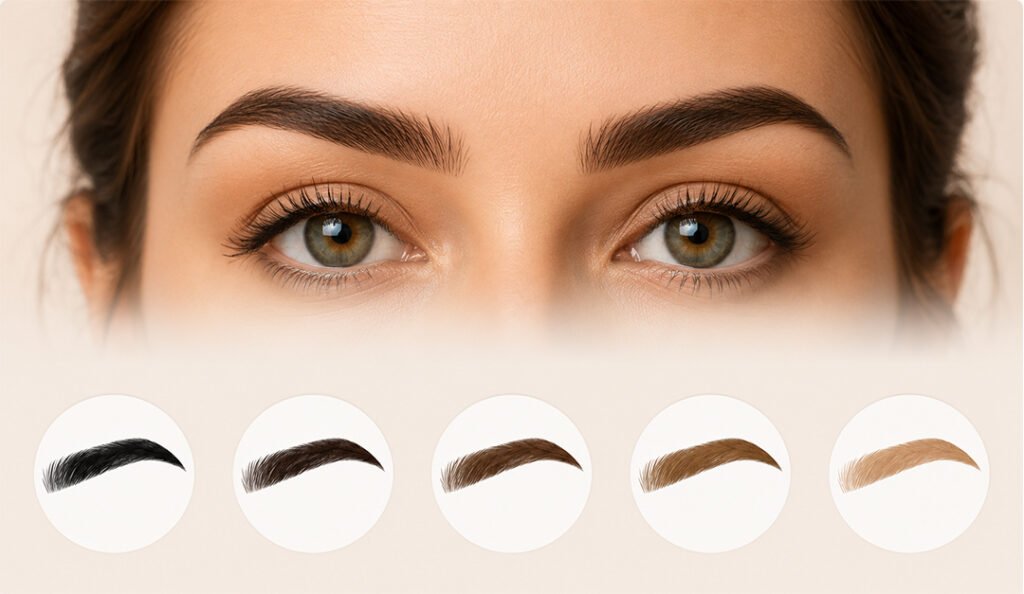
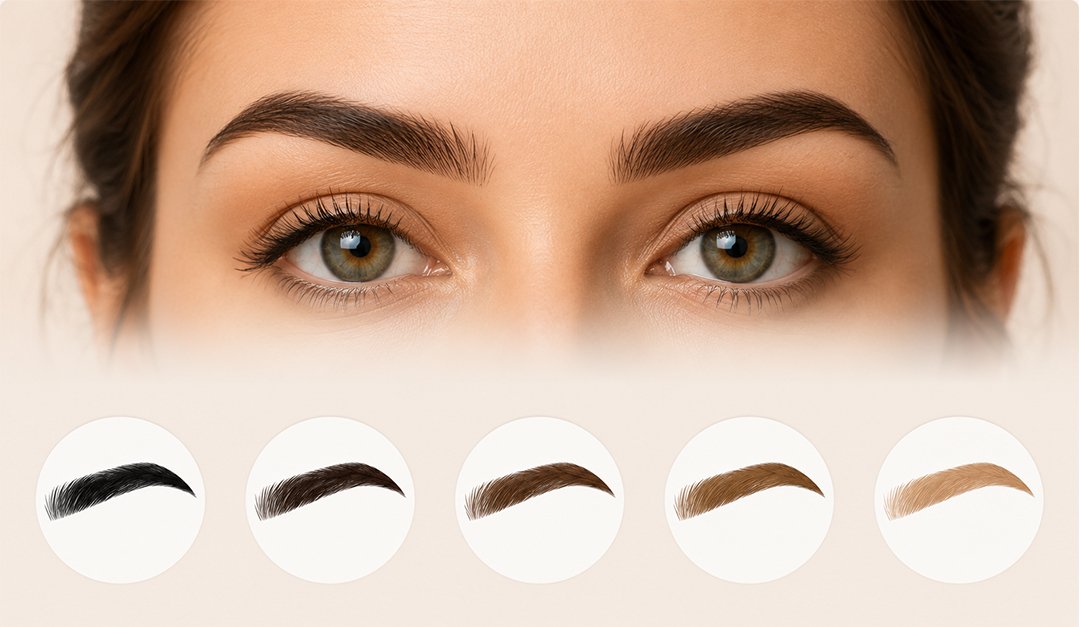
There’s an old rule among colorists that still holds up: if you’re a brunette, go about one shade lighter than your natural hair. If you’re blonde, go one to two shades darker. And if you’re a redhead, skip true red entirely — a soft auburn or warm taupe will look far more like eyebrows and far less like a costume.
Step 2: Let Your Skin Tone Weigh In Too
Skin tone isn’t a minor detail here — it changes everything. Fair skin tends to get overwhelmed by anything too dark; a soft ash brown or taupe usually sits much better. Medium and olive skin tones have more room to play with warm browns or a gentle soft black. Deeper skin tones, meanwhile, can often carry rich, dark brown or near-black without it ever looking heavy.
And if your skin shifts noticeably with the seasons — a summer tan that fades by January — it’s worth keeping two shades on hand rather than forcing one color to work year-round.
Step 3: Never Skip the Test
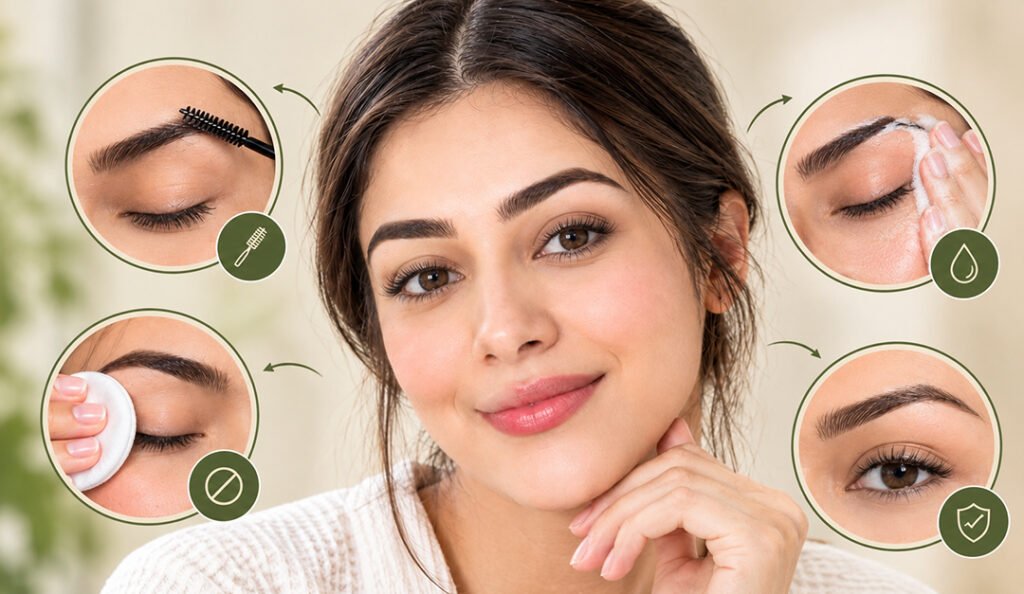
This is the step everyone rushes past, and it’s usually the reason someone ends up unhappy with the result. Whatever you’re about to use, put a small amount on your wrist or along your jaw first. Then wait. Check it in actual daylight — not the yellow-toned bathroom bulb that makes everything look three shades warmer than it is.
This matters even more if you’re using henna, because henna doesn’t show its final color right away. It develops over a few hours as it oxidizes, so what you see minutes after applying it isn’t what you’ll wake up to the next morning. Patience here saves you from a shade of regret.
Step 4: Decide How Much Maintenance You’re Willing to Do
Not every eyebrow product plays by the same rules, and how long a color lasts should genuinely factor into your decision.
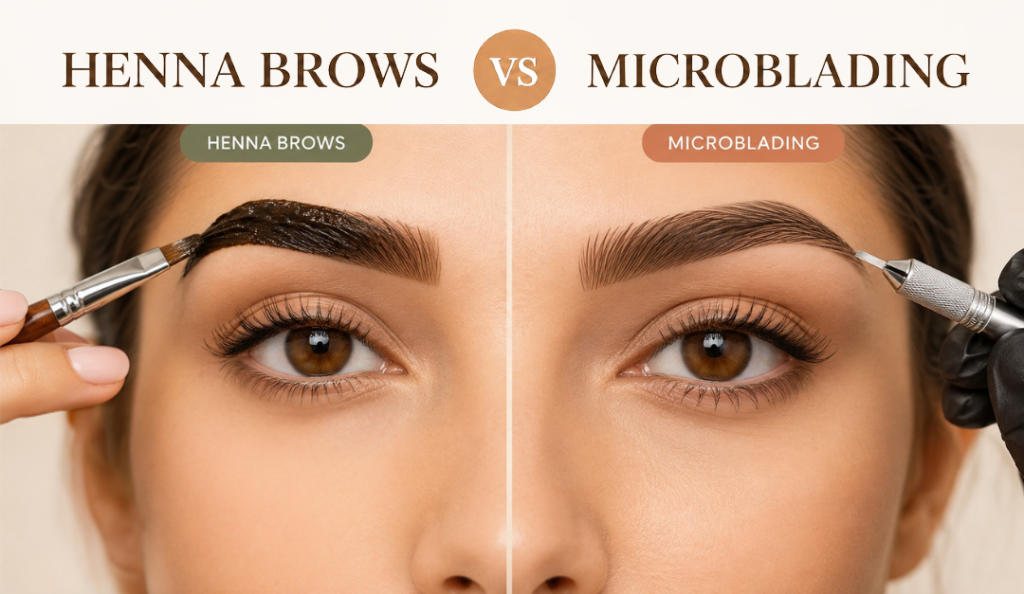
Pencils and powders are a daily commitment — beautiful for twelve hours, then gone. Tinted gels hang around a little longer but rinse out fast with cleansers or oil-based products. Chemical tints last one to two weeks, though they can leave skin irritated with repeated use. Eyebrow henna sits at the far end of that spectrum — the stain typically lasts four to six weeks on skin and can hold in the brow hair itself for six to eight weeks.
If your mornings are already too full for another step in the routine, that difference alone tends to make the decision for you.
Step 5: Think About What You’re Actually Putting Near Your Eyes
This is the step people consider last, when honestly, it probably deserves to come first. A lot of eyebrow tints lean on ammonia and PPD (para-phenylenediamine) to get that fast, dramatic color. Fine for some people. For others — especially anyone with sensitive skin around the eye area — it means redness, itching, or worse, and repeated exposure over months can leave the brow hair thinner than it started.
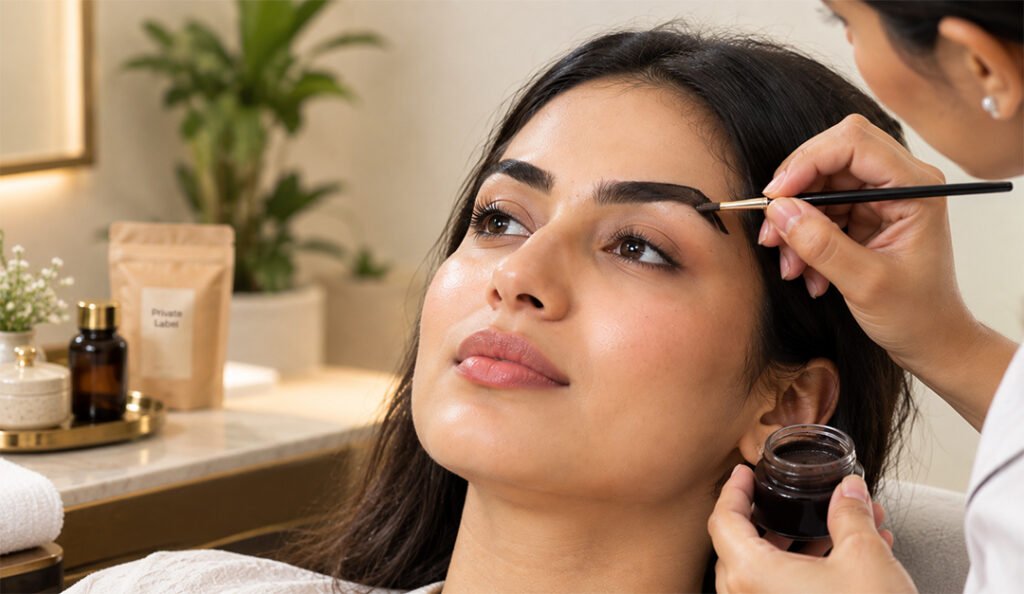
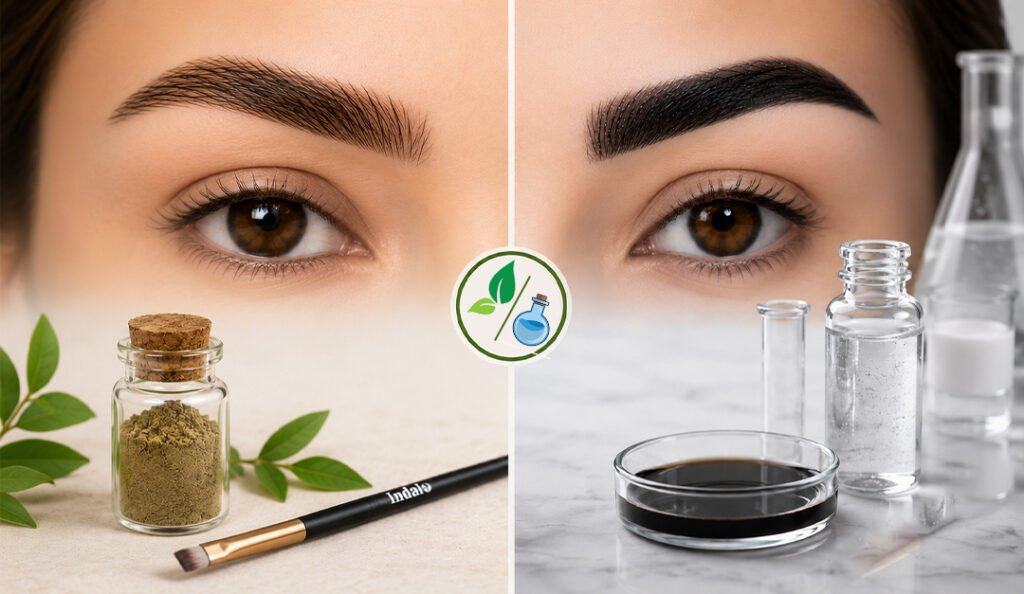
This is a big part of why eyebrow henna has quietly become the preferred choice for people stepping away from synthetic beauty products. It’s plant-based. No ammonia, no peroxide, nothing synthetic doing the heavy lifting. Henna has also been used for centuries as a conditioning treatment for hair, so instead of just coloring the brows, it tends to leave them looking healthier over time — not just darker.
Why People Keep Coming Back to Henna Once They Try It
Once the right shade is sorted out, the product carrying that color matters as much. Here’s what tends to convince people to stick with henna long after their first try:
It comes from a plant, not a lab. Real eyebrow henna is made from the powdered leaf of Lawsonia inermis, sometimes blended with other botanicals for depth. Nothing synthetic required.
It doesn’t look flat. Chemical tints often lay down one uniform block of color. Henna stains unevenly in the best way — a little deeper at the root, softer toward the tip — which mimics how brow hair naturally grows and reads far more real up close.
It helps where hair is thin. Because henna colors the skin underneath the hair as well as the hair itself, sparse areas fill in visually, without needing a fresh application every single day.
It asks less of you. Weeks of color from one sitting means one less thing crowding your morning routine.
It tends to be kinder to sensitive skin. Skipping the harsh chemicals generally means fewer reactions — though, as with anything new near your eyes, a patch test first is just common sense.
A Quiet Detail That Actually Matters: Where the Henna Comes From
Here’s something most people never think to ask: not all henna is grown or processed the same way, and it shows. The strength of the stain, how evenly it develops, how gentle it feels on skin — all of it traces back to the soil the plant grew in and how carefully the leaves were milled into powder.
Sojat, in Rajasthan, has earned its reputation for a reason. The soil and climate there produce henna leaves with an unusually high natural dye content, something buyers and formulators have recognized for generations. Henna sourced directly from that region, without unnecessary fillers cut into the powder, tends to deliver a noticeably richer, more consistent stain than the mixed-origin henna found on many mass-market shelves.
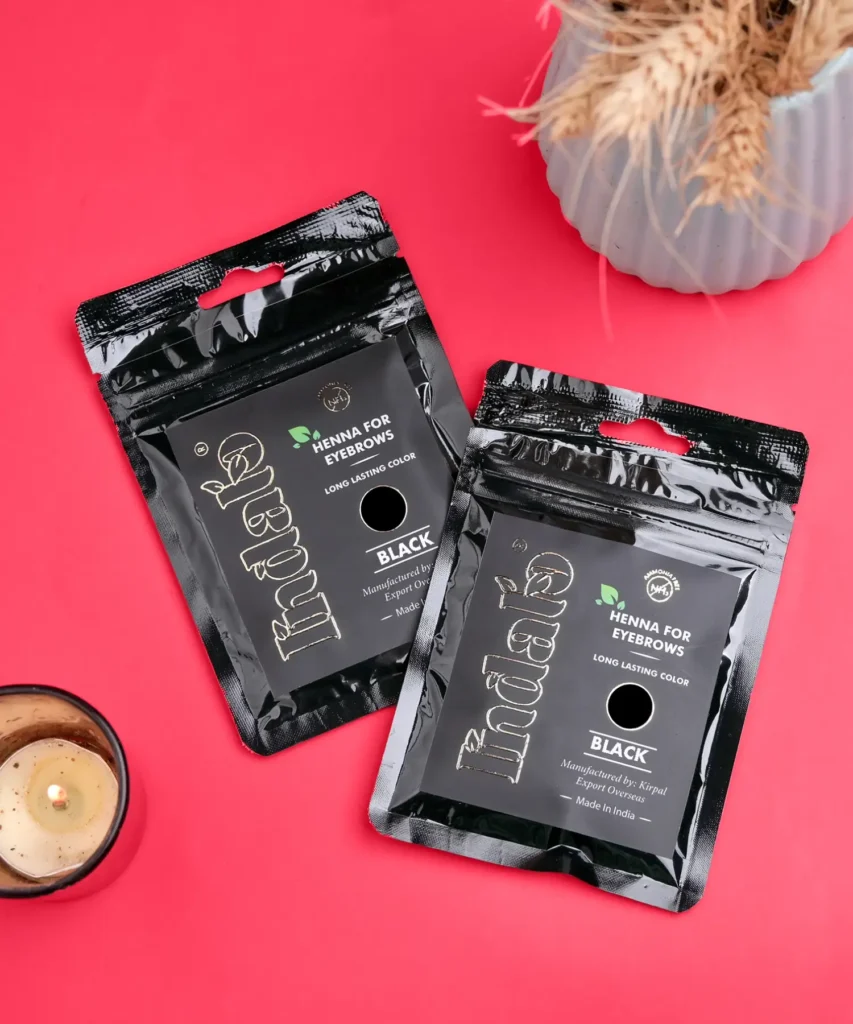
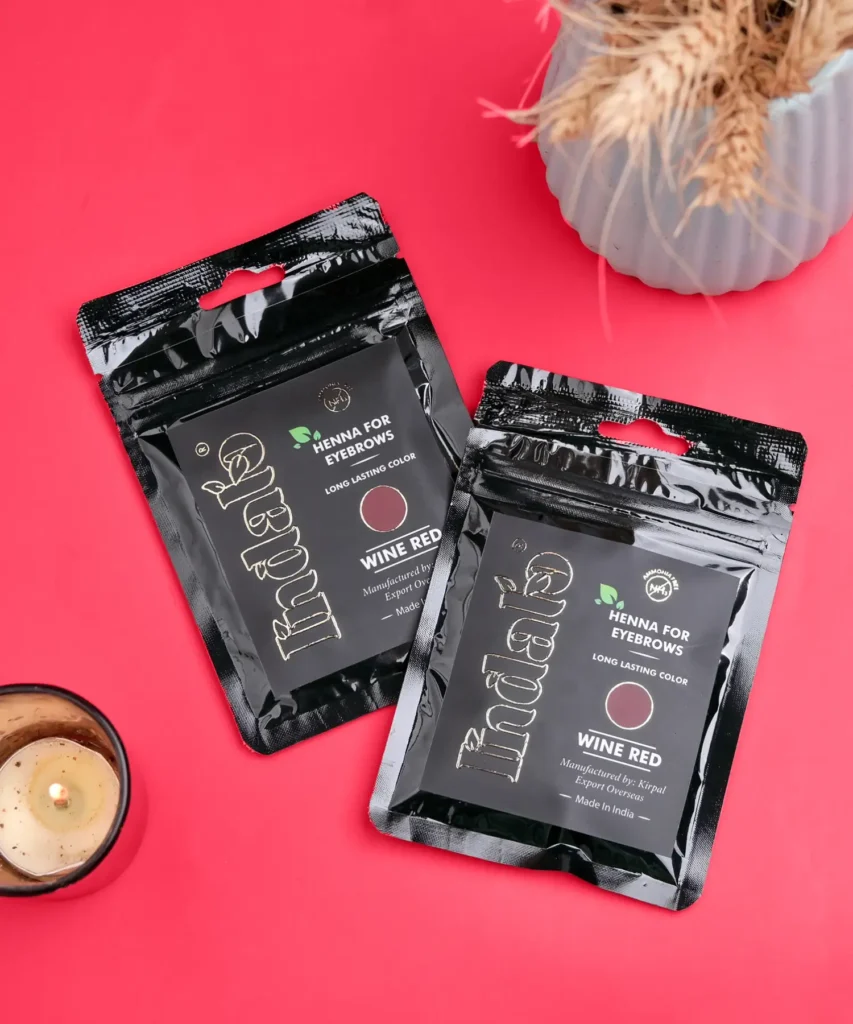
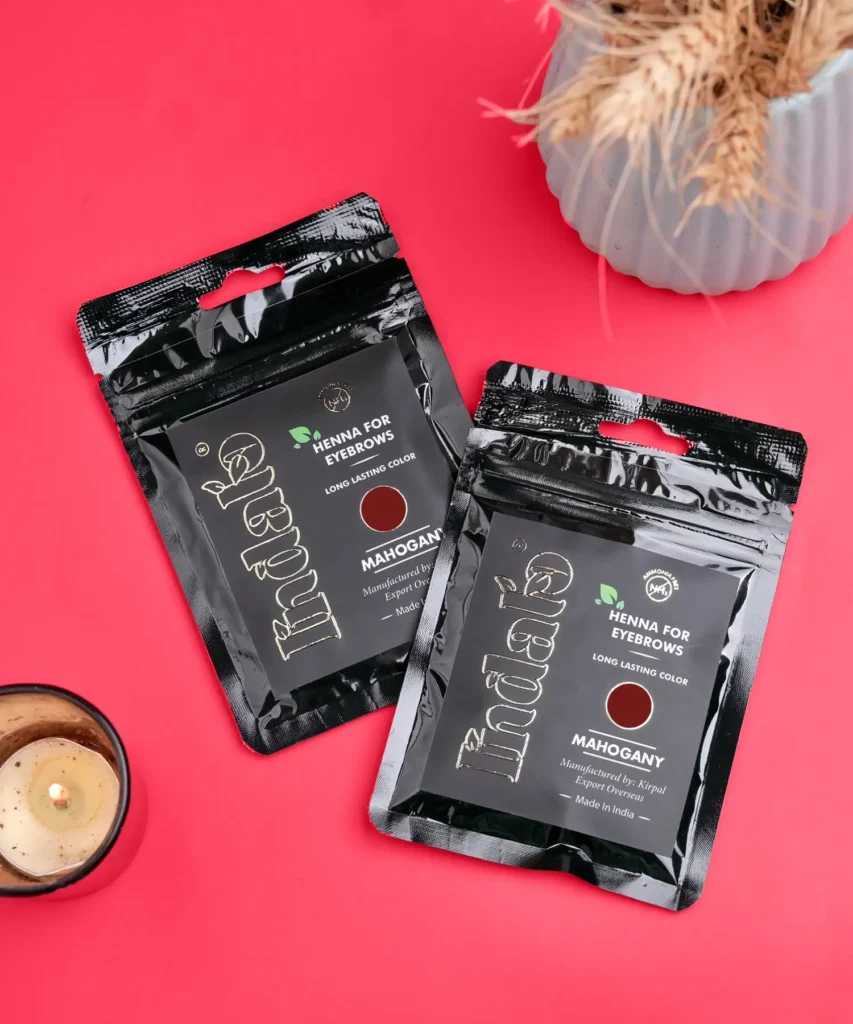
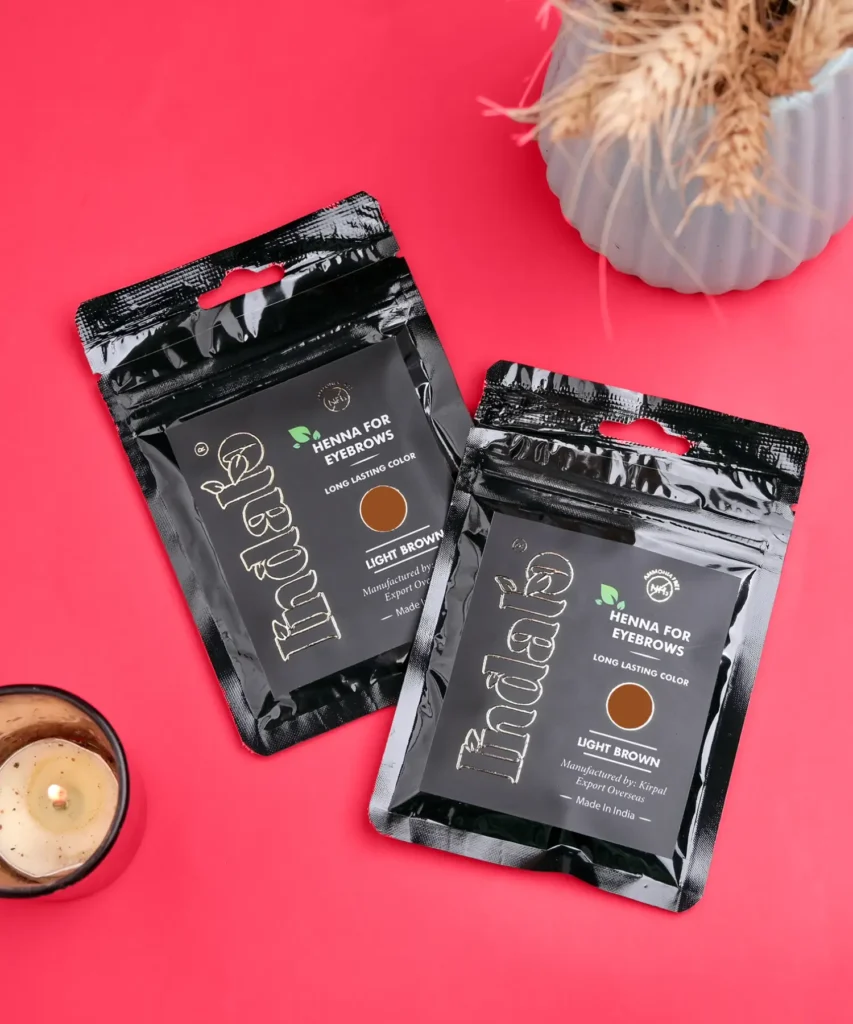
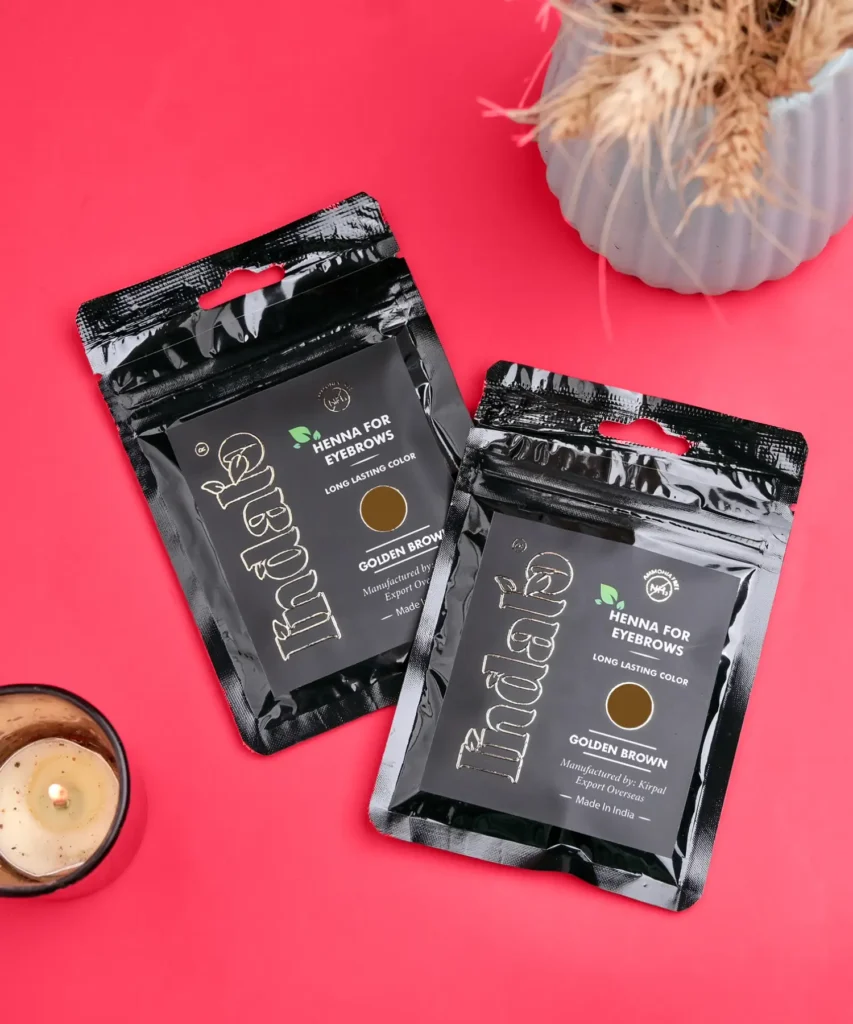
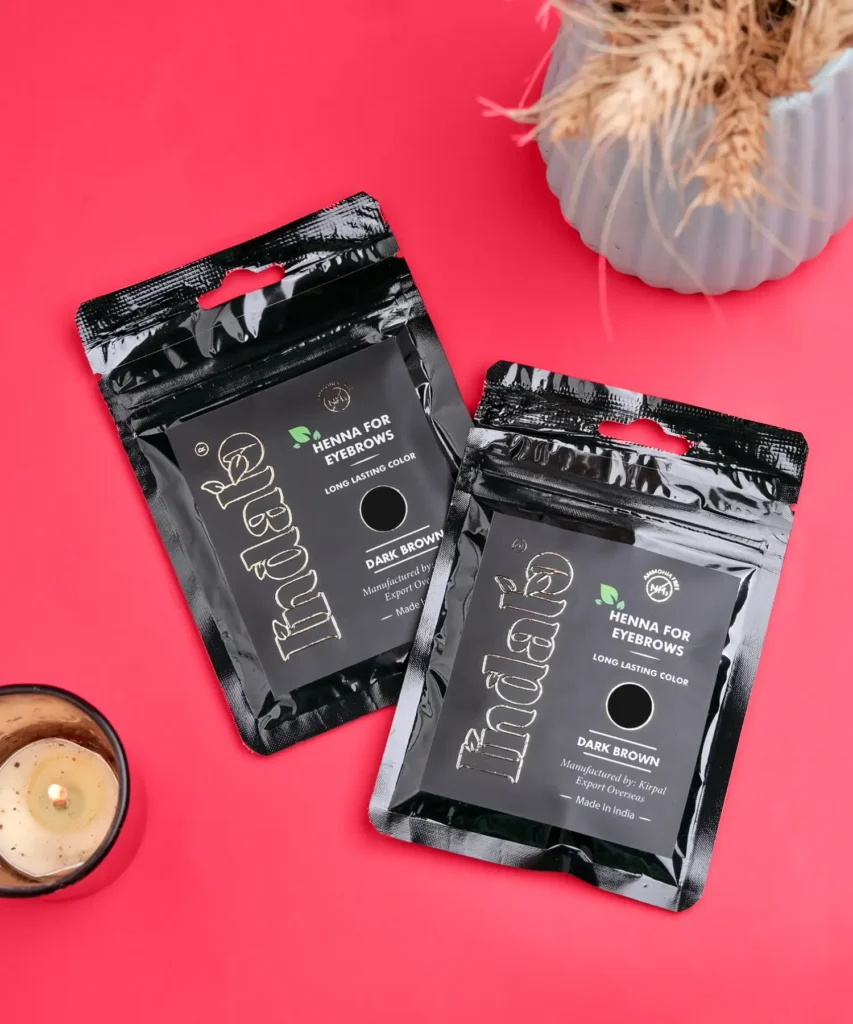
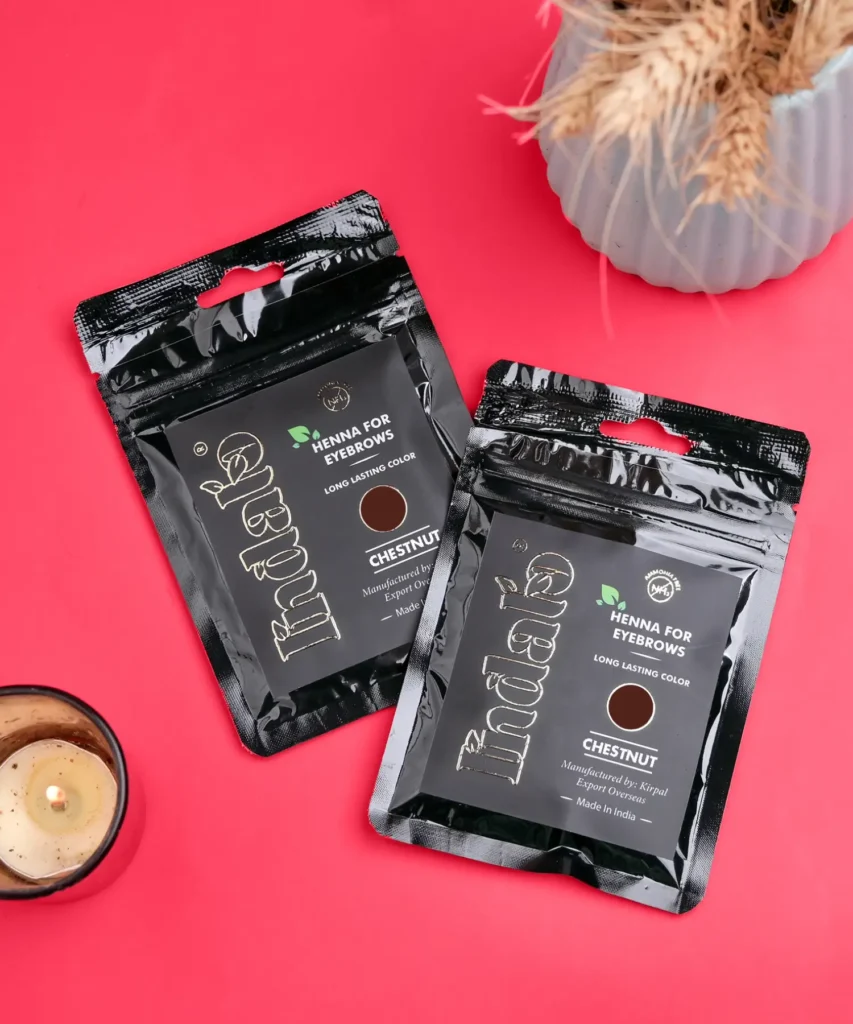
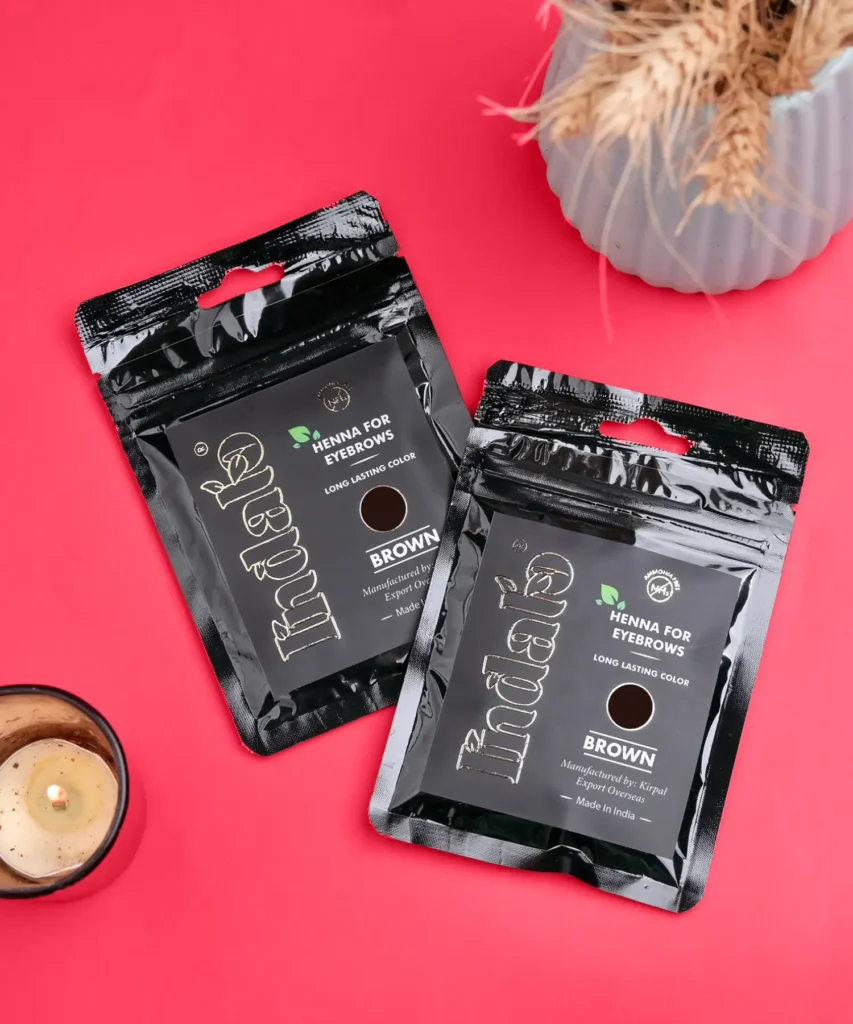
Kirpal Export Overseas, manufacturing under the Indalo brand, sources its henna directly from the Sojat belt and produces both hair color and eyebrow color formulations built to BIS/IS 11142 quality standards. For salons, private label brands, and retailers across the USA looking to offer their customers a genuinely natural eyebrow color, that kind of traceability — from farm to finished powder — is the difference customers actually notice, even if they can’t always explain why.
Frequently Asked Questions
1. How long does eyebrow henna last compared to regular eyebrow tint? Eyebrow henna typically lasts four to six weeks on the skin and six to eight weeks on the hair, compared to one to two weeks for standard chemical eyebrow tints.
2. Can eyebrow henna be used on sensitive skin? Yes, in most cases. Because it’s free from ammonia and PPD, henna is generally better tolerated by sensitive skin than chemical tints, though a patch test 24 to 48 hours before full application is always recommended.
3. Will eyebrow henna look too dark or unnatural? Not if the right shade is chosen for your skin tone and undertone. Henna also tends to fade gradually and evenly, which helps it look more natural than an instant, flat-colored tint.
4. Is eyebrow henna the same as the henna used for hair or hand designs? It’s from the same plant, but eyebrow henna formulations are specifically processed and blended for finer, more controlled application on brow hair and skin, unlike body art henna, which is formulated differently for skin-only staining.
5. Where does the best quality eyebrow henna come from? Henna grown in the Sojat region of Rajasthan, India, is widely considered among the highest quality in the world due to its naturally high dye content and is used by established manufacturers to produce premium hair and eyebrow color powders.